Product
From Standard PV Modules to Custom Engineering: Supporting Diverse Solar Applications
How Callsun combines high-power standard modules with non-standard engineering to serve utility-scale, C&I, off-grid, RV, marine and custom equipment applications.
Solar has become more standardized, but the places where solar is installed have not. A utility-scale project may require thousands of modules with consistent electrical performance and predictable delivery. An RV roof may offer only a few fragmented areas between an air conditioner, a vent and a skylight. A marine installation must work around curved surfaces, salt mist and persistent vibration. A remote cabin may need a compact array that can support critical loads without access to the grid.
These projects all use photovoltaic modules, yet they do not ask the same question of a manufacturer. Some depend on production scale and batch consistency. Others depend on dimensions, electrical architecture, materials, cable routing or mounting details that a standard catalog product cannot fully address.
For Callsun, this is why standard module manufacturing and custom engineering are not competing directions. They are two parts of the same manufacturing capability.
Where Standardization Creates Value
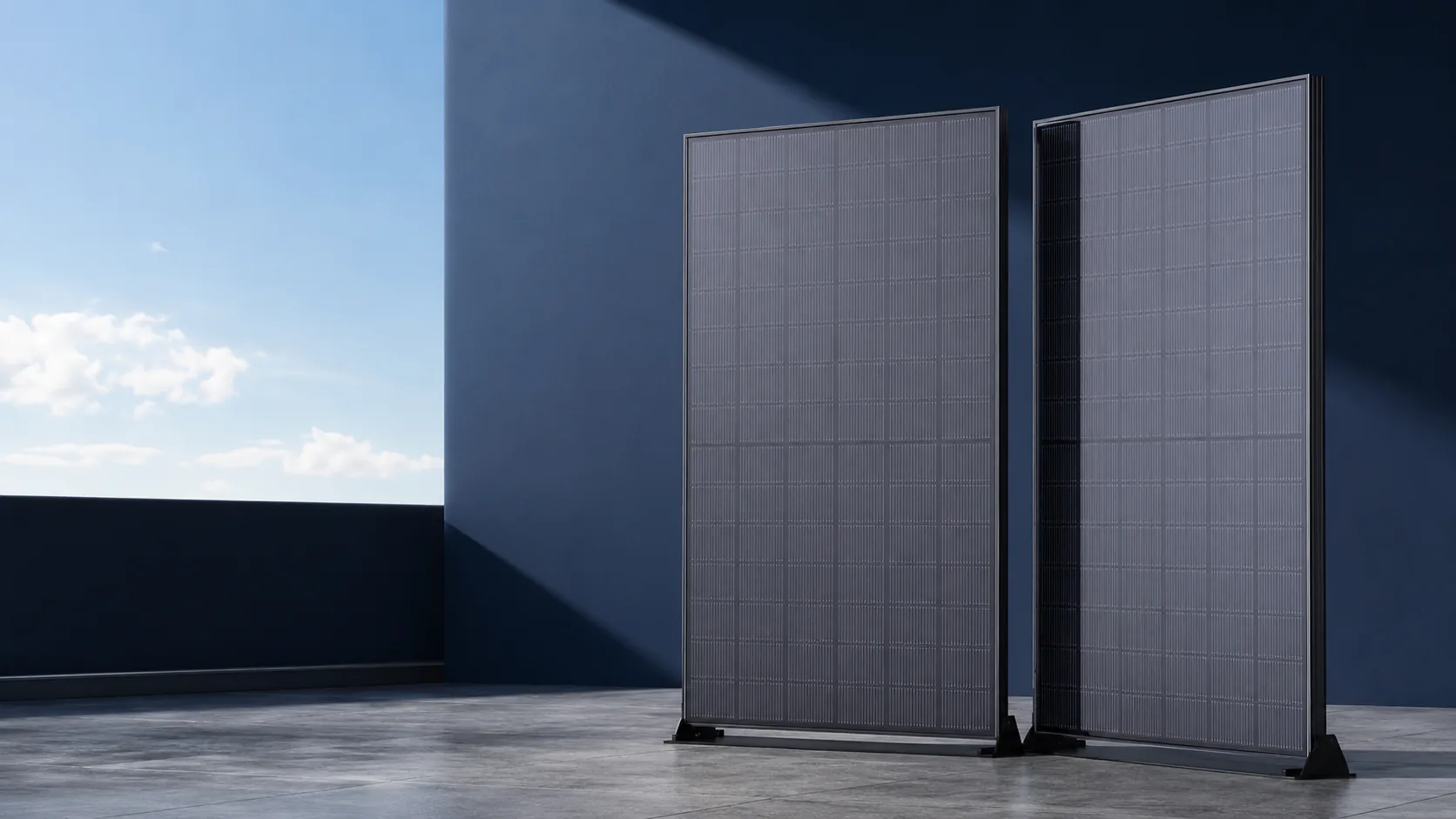
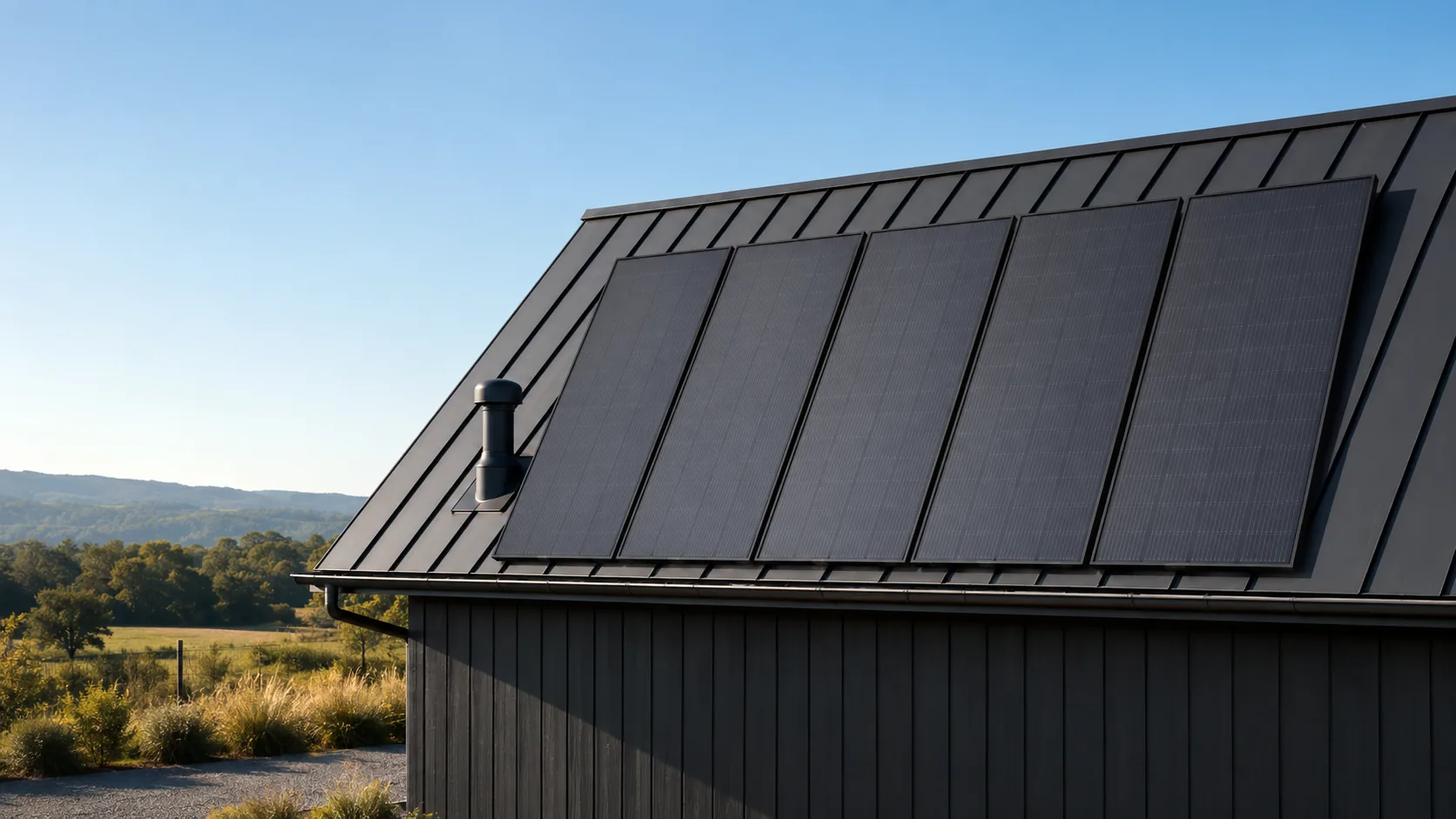
Standard modules remain the right foundation for residential rooftops, commercial buildings and utility-scale projects where installation conditions are relatively predictable. In these markets, higher power output must be supported by repeatable production, stable materials, controlled processes and documented testing. A strong specification matters, but the ability to reproduce that specification across a large order matters just as much.
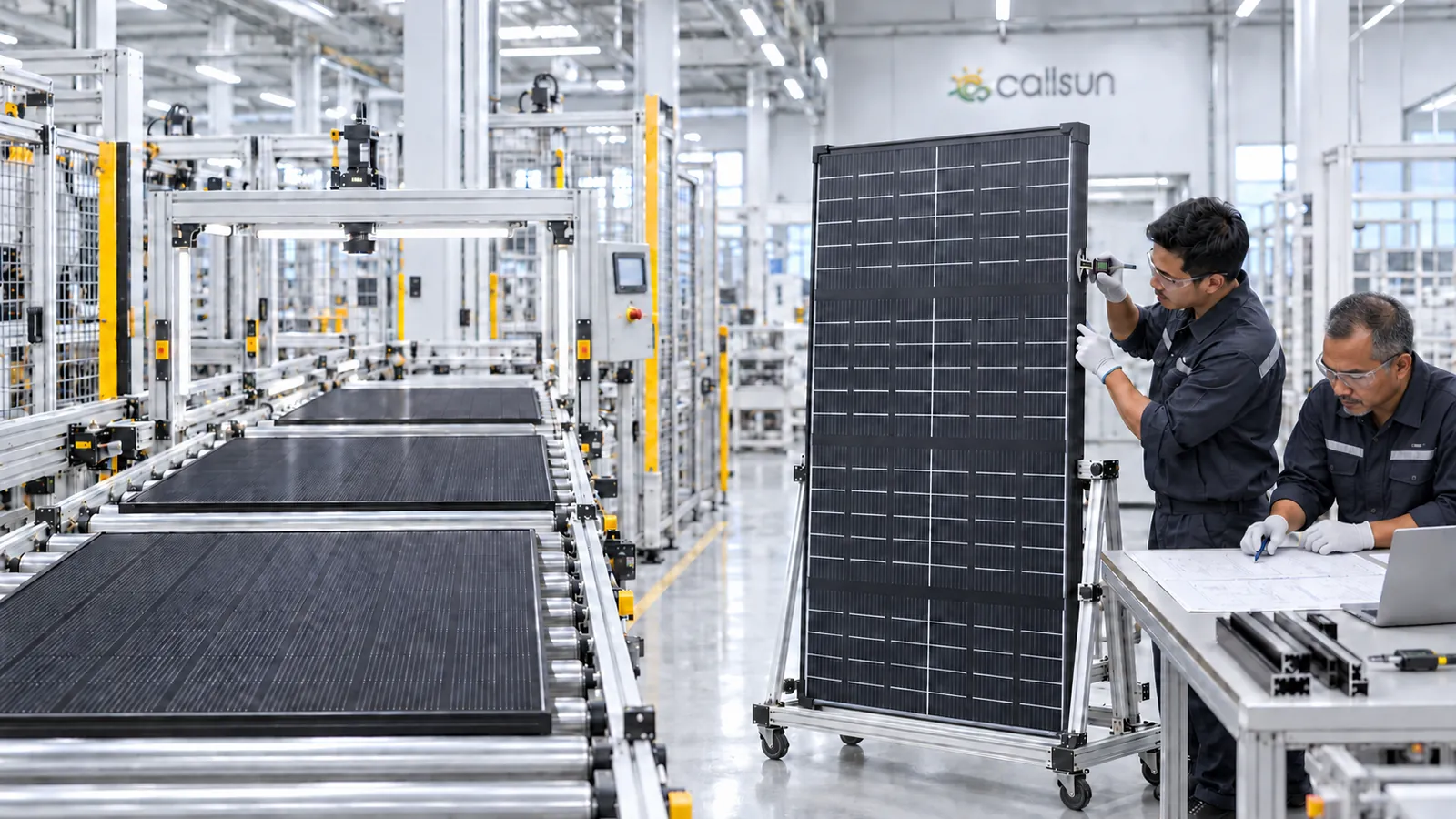
Callsun manufactures high-power standard PV modules in product classes including 450W, 580W and 620W. The production process covers cell cutting, multi-busbar stringing, in-process electroluminescence inspection, vision-assisted positioning and layup, controlled lamination, framing, final EL inspection and I–V testing. The purpose of this process is not automation for its own sake. It is to control variation and support consistent electrical and structural performance from sample approval through volume delivery.
For distributors and project customers, standardization also simplifies product documentation, inventory planning, system design and repeat orders. When the application can be served by a mature module format, the best answer is often a stable product manufactured at scale.
Where Standard Modules Reach Their Limits
Many emerging solar applications begin with constraints rather than specifications. The customer may know the available roof dimensions, the location of an obstruction, the system voltage or the required output, but no existing module fits all of those conditions at once.
A larger module may offer more watts but leave unusable areas around rooftop equipment. A conventional internal circuit may lose disproportionate output when a fixed object shades one section. A standard cable length or junction-box position may create unnecessary routing problems inside a vehicle or product enclosure. In marine and outdoor equipment applications, the material and structural requirements may also differ from those of a conventional rooftop.
At this point, customization should not mean simply changing the outside dimensions. A viable custom module may require a new cell layout, revised electrical parameters, different bypass paths, material selection, frame design, output position, cable length, connector choice and mounting interface. Each change affects manufacturing and validation.
A Practical Custom Engineering Process
Callsun approaches non-standard projects as an engineering process. The work begins with the application: available dimensions, installation orientation, target power, system voltage, expected shading, environmental exposure, structural limits, certification requirements and planned order volume. These inputs determine whether an existing standard module, an adapted platform or a fully custom configuration is the most practical route.
Once the direction is defined, the project moves through cell arrangement, electrical design, bill-of-material evaluation, sample production and performance testing. Process feasibility is reviewed before volume introduction so that a prototype is not treated as proof that a design can be manufactured consistently.
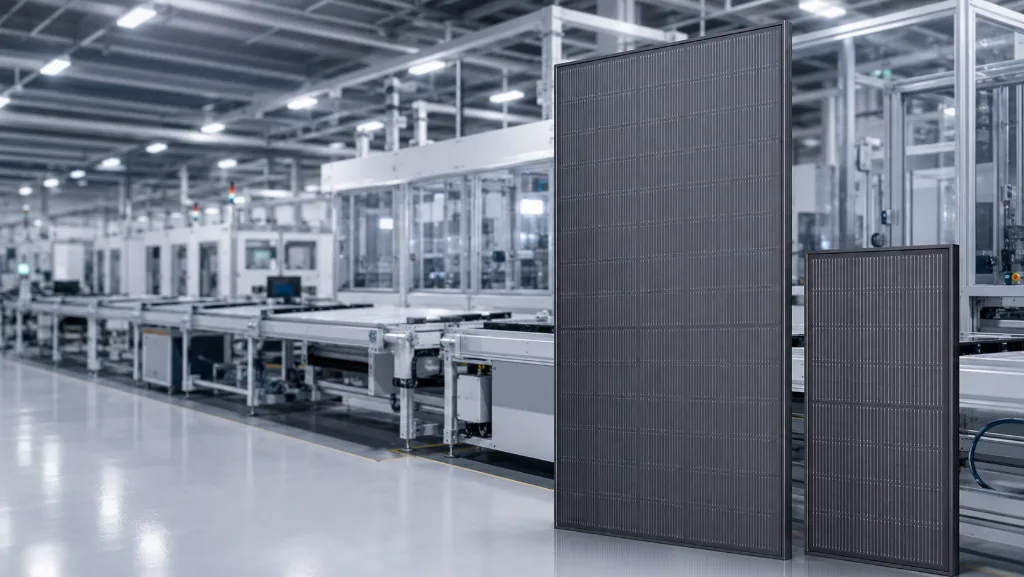
This capability is supported by flexible non-standard module production as well as related manufacturing resources for cables, aluminum frames, injection-molded parts and selected structural components. It allows product decisions to be considered as a connected system instead of a collection of isolated parts.
Customization is valuable only when the finished design can move from an application requirement to a verified, repeatable product.
One Manufacturing Partner, Different Application Paths
The combination of scalable and flexible production supports a wider range of customers. A distributor may need a stable standard portfolio. An equipment manufacturer may need a module integrated into a new product. An RV or marine partner may need dimensions and electrical zoning matched to a constrained surface. An off-grid system integrator may require module parameters aligned with a specific controller and storage architecture. An EPC or project buyer may prioritize certifications, quality records, batch consistency and delivery planning.
The product path should therefore follow the application—not the other way around. Callsun supports RV, marine, off-grid cabin, balcony solar, residential, small commercial and industrial, and utility-scale applications through standard high-power modules, non-standard module engineering and application-oriented configuration support.
What B2B Customers Should Prepare
A productive module discussion begins with more than a wattage target. Customers should provide the installation location, usable dimensions, system voltage, target output, shading pattern, structural or weight limits, operating environment, target market, certification requirements and estimated order quantity. Drawings and installation photos are especially useful for constrained or integrated applications.
With this information, Callsun can help determine whether the project is best served by a standard product, an adapted module or a custom development path—and what must be validated before production.
Talk to Callsun
If your project requires a reliable standard PV module supply or a module engineered around a specific product and installation space, share your application requirements with our team. We will help evaluate the most practical route from product selection and sample validation to volume delivery.
Tagged
Next step
Have a non-standard module requirement?
Share your installation dimensions, target output, system voltage and order volume. Callsun can help evaluate the most practical route from product selection to volume delivery.
Talk to Callsun engineeringContinue Reading