Product
Standard vs. Custom Solar Panels: When Does a Project Need Custom Module Engineering?
Learn when standard solar panels are the better choice, when custom PV modules are justified, and what buyers should confirm before sample development.
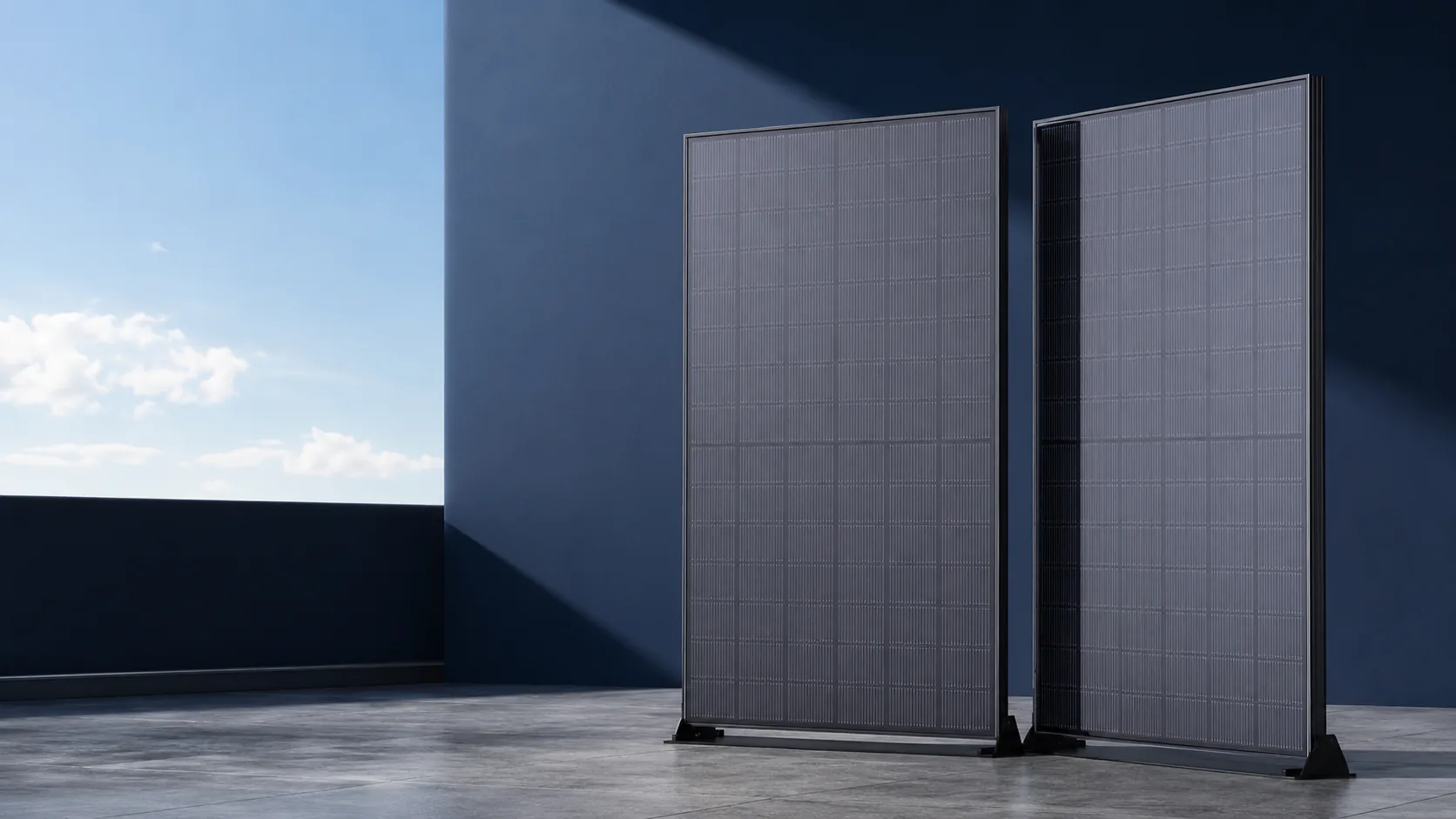
Standard solar panels should normally be the first option for a project. They are built around established dimensions, electrical configurations, production processes, and supply models, making them suitable for most conventional rooftops, distributed PV systems, off-grid installations, and small commercial projects.
Custom PV modules become relevant when a standard product cannot reasonably fit the available installation space, target output, structural arrangement, electrical requirements, or connection interface. In those cases, custom engineering can improve product fit and make better use of a constrained installation area.
The decision is therefore not about whether a custom module is more advanced than a standard one. It is about whether the project has a genuine constraint that justifies a different product design and development process.
What Is a Standard Solar Panel?
A standard solar panel is a module produced according to an established product specification. Its power class, dimensions, cell layout, glass structure, frame, junction box, cables, connectors, and electrical characteristics have already been defined.
Because the product and production process are established, standard modules are generally better suited to repeat purchasing and volume supply. Buyers can evaluate them using existing datasheets, model-specific technical documents, sample products, and agreed inspection requirements.
Callsun’s standard PV module portfolio covers 450W, 580W, 620W, and 720W power classes. These modules can be considered for residential rooftops, distributed PV, off-grid systems, and small commercial and industrial projects, depending on the installation conditions and system requirements.
Higher power density may help increase installed capacity where the available area or permitted module count is limited. However, rated power alone does not determine whether a module is suitable. Physical dimensions, weight, voltage, current, string configuration, inverter or controller limits, mounting conditions, and local requirements must all be considered.
A 720W module, for example, is not automatically a better choice than a 450W module simply because its rated power is higher. If the larger format does not fit the roof layout, handling conditions, mounting structure, or electrical design, the lower-power module may be more appropriate.
Standard-module selection is therefore still an engineering decision, even when no product customization is required.
What Is a Custom PV Module?
A custom PV module is developed or adapted around defined product or application requirements that cannot be adequately addressed by an existing standard module.
These requirements may relate to the available footprint, target wattage, module dimensions, cell layout, electrical configuration, frame structure, cable position, connector type, mounting method, or integration with another piece of equipment.
Callsun offers representative custom glass modules in 180W, 200W, and 215W power classes for applications including RVs, vehicle rooftops, balconies, off-grid equipment, and other installations with specific space or structural constraints.
These products demonstrate the types of non-standard configurations that can be manufactured, but they should not be interpreted as proof that every possible size, shape, power rating, or electrical specification is automatically feasible.
A proposed custom module must still be evaluated against cell dimensions, circuit design, material behavior, production equipment, lamination requirements, frame and glass processing, testing methods, certification needs, order conditions, and manufacturing repeatability.
Custom manufacturing begins with feasibility assessment, not with an unconditional promise to produce any requested specification.
When Is a Standard Module the Better Choice?
A standard module is usually the more appropriate option when the installation area is regular, the system can accommodate established module dimensions, and the available electrical specifications match the planned inverter, controller, or string design.
It is also preferable when the buyer values straightforward product selection, established documentation, repeat ordering, and scalable supply more than a project-specific physical configuration.
For distributors and wholesalers, standard modules can simplify portfolio planning. The products have defined specifications that can be presented consistently to multiple customers and used across a wider range of conventional applications.
For installers and system providers, established dimensions and electrical parameters can make system design and installation planning more direct, provided the module is compatible with the available space and other system components.
Standard products may also avoid the additional engineering review, prototype development, validation work, and production preparation associated with custom modules.
A project should not move into custom development simply because a different dimension or appearance would be convenient. The expected benefit should be clear enough to justify the additional design, validation, documentation, and supply considerations.
When Does Custom Module Engineering Make Sense?
Custom engineering adds value when a specific project limitation cannot be solved effectively through standard-module selection or installation planning.
One common constraint is the available installation area. RV roofs, vehicle roofs, balconies, walls, compact off-grid buildings, and equipment surfaces often contain vents, hatches, rails, curves, service areas, or other obstacles. The total roof or surface area may appear sufficient, while the usable continuous space is much smaller.
In such cases, a standard module may leave significant unused space or may not fit at all. A custom-size module can be assessed to determine whether the available area can support a more suitable physical layout and meaningful power output.
Structural requirements may also justify custom development. A module intended for vehicle integration, equipment mounting, or a special support structure may require specific frame dimensions, mounting locations, cable routing, junction-box placement, or connection arrangements.
Electrical requirements are another consideration. The target voltage and current must remain compatible with the intended system, controller, inverter, battery configuration, or connected equipment. Changing a module’s physical size or cell layout affects more than its appearance; it can also change its electrical behavior.
Custom engineering may also be appropriate when the module becomes part of another manufactured product. In this situation, the panel must be evaluated as a component within a wider product system, rather than as a standalone module selected after the rest of the equipment has already been designed.
The common factor in these cases is not simply a desire for something different. It is a measurable constraint involving space, structure, electrical design, connection, installation, or equipment integration.
Custom Does Not Mean Changing One Dimension
One of the most common misunderstandings in custom solar projects is that a module can be resized while every other characteristic remains unchanged.
In practice, module dimensions, cell arrangement, target output, voltage, current, glass and frame structure, cable routing, junction-box location, and mounting conditions are connected.
A narrower module may require a different cell layout. A different cell layout can affect voltage and current. Changes to the module structure may influence glass processing, framing, lamination, internal spacing, and production handling. A new cable or connector arrangement may affect equipment integration and installation.
The requested combination must also be manufacturable with sufficient consistency. A design that can be assembled once as a sample is not automatically suitable for repeatable volume production.
This is why a custom solar panel manufacturer should evaluate the complete requirement rather than approve isolated changes one by one.
The buyer should provide as much project information as possible at the beginning, including the maximum usable dimensions, target output, voltage and current requirements, operating environment, installation method, mounting restrictions, cable and connector requirements, destination market, expected order conditions, and any relevant drawings or equipment specifications.
Incomplete requirements often lead to repeated design changes later in the process.
Start with the Available Space and System Boundaries
For space-constrained applications, the correct starting point is the usable installation area rather than the nominal size of the roof, wall, vehicle, balcony, or equipment surface.
The buyer should identify the maximum continuous area available after accounting for vents, access paths, mounting hardware, structural boundaries, shading sources, safety clearances, and maintenance requirements.
The next step is to define the target power and electrical limits. These include the intended system voltage, acceptable operating current, controller or inverter input range, string arrangement, connection method, and expected expansion requirements.
The module cannot be evaluated separately from the system that will receive its output. A physical layout that fits the space but exceeds an input-voltage or current limit is not a workable design.
The operating environment must also be considered. Temperature, humidity, ultraviolet exposure, wind, vibration, mechanical load, salt or moisture exposure, and installation orientation may affect material and structural decisions. The applicable requirements depend on the actual application and should not be assumed from a general product category.
A clear definition of these boundaries allows the manufacturer to determine whether an existing module can meet the requirement, whether a standard module can be used with a revised layout, or whether custom engineering is justified.
What Happens During Custom Module Development?
A controlled custom-module project normally moves through several stages: requirement definition, engineering assessment, sample development, validation, and production introduction.
During requirement definition, the buyer and manufacturer establish the purpose of the module and the conditions it must meet. This stage should resolve the key mechanical, electrical, structural, connection, application, and market requirements before detailed development begins.
Engineering assessment examines whether the requested combination is technically and commercially feasible. The manufacturer may identify conflicts between target wattage and available area, between module dimensions and cell layout, or between electrical requirements and the planned internal circuit.
The proposed configuration may need to be revised before a sample is produced. This is a normal part of engineering work and should not be treated as a failure to follow the original request.
Sample development then turns the agreed concept into a physical product for evaluation. The sample can be used to verify dimensions, appearance, structural fit, electrical characteristics, cable and connector placement, mounting compatibility, and integration with the intended system or equipment.
Validation should be based on agreed requirements rather than a general visual judgment. Both parties need to identify which results must be confirmed before the design can move forward.
The final stage is production validation and volume introduction. The manufacturer must determine how the approved specifications, drawings, materials, process controls, inspection criteria, and packaging requirements will be carried into repeatable production.
The objective is not merely to reproduce the appearance of the sample. It is to maintain the approved product requirements across a controlled manufacturing process.
Sample Approval Is Not the End of Validation
A successful sample is an important milestone, but it does not independently prove that the design is ready for unrestricted volume production.
The sample may confirm physical fit and basic electrical performance while additional production, reliability, documentation, packaging, or market requirements remain unresolved.
Before approval, buyers should verify which product characteristics are fixed, which remain subject to adjustment, and which documents define the final configuration. Where relevant, the review may include product drawings, dimensions, electrical parameters, materials, connectors, cable lengths, labels, packaging, and inspection requirements.
If the module will be integrated into another product, the buyer should test it within the actual equipment or a representative installation. Tabletop inspection alone may not reveal issues involving mounting, cable routing, controller compatibility, shading, vibration, thermal conditions, or user operation.
Changes made after sample approval should be documented and reviewed for their effect on manufacturing and validation. A small structural or electrical change may require more than a cosmetic update.
The transition from sample to production should therefore be treated as a controlled release process, not as an automatic consequence of receiving an acceptable prototype.
Quality Control Must Match the Production Path
Standard and custom modules may use different production arrangements, but both require defined process and finished-product controls.
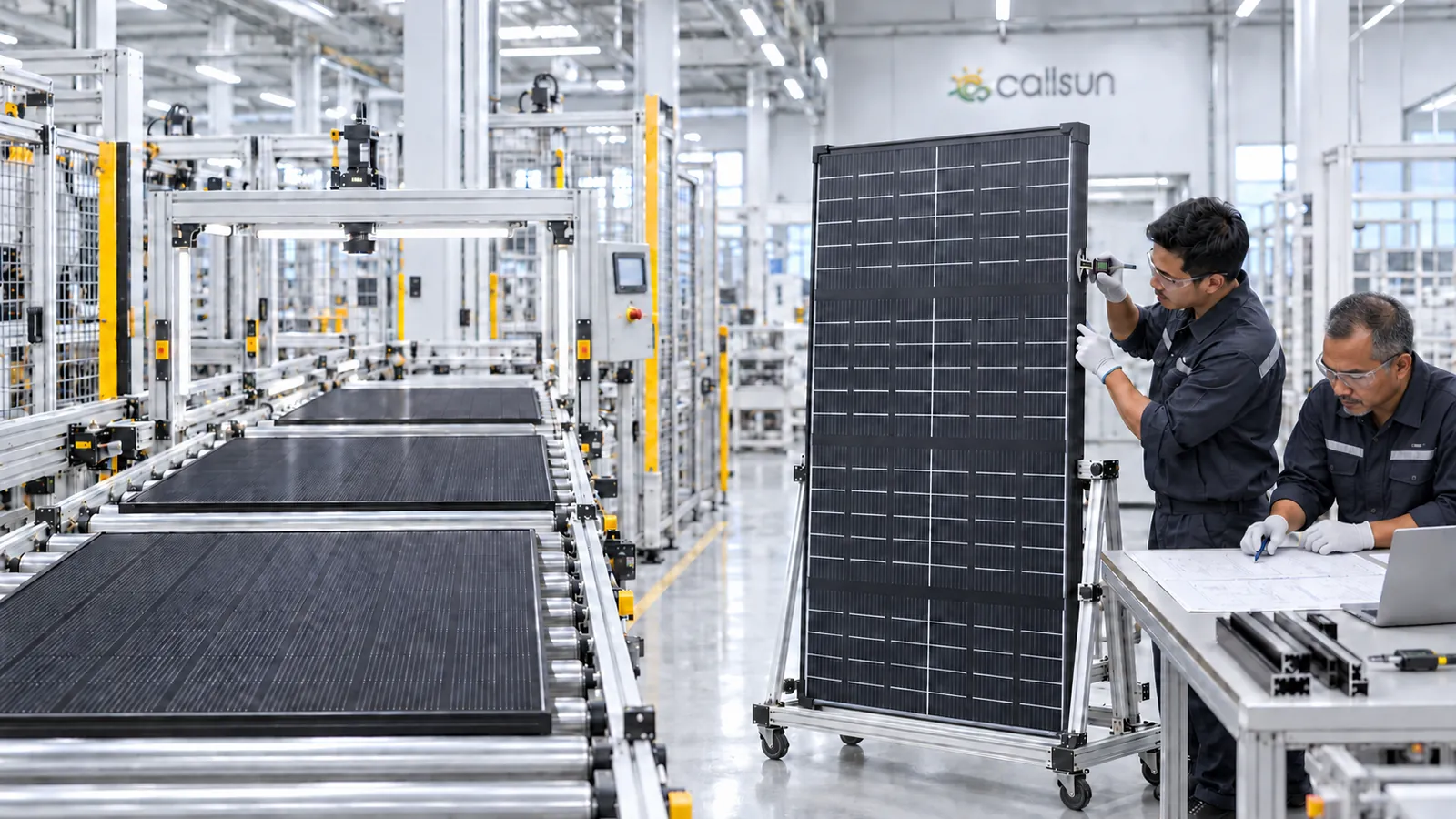
Callsun’s standard modules are produced through a fully automated process covering non-destructive cell cutting, multi-busbar string welding, post-welding in-process EL inspection, vision-guided layup, controlled high-temperature vacuum lamination, automated framing, and final EL and I-V testing.
Custom glass modules combine semi-automated production with manual operations. Based on the product dimensions and structural requirements, the process covers cell cutting, string welding, layup, pre-lamination EL inspection, lamination, edge trimming, framing, and final EL and I-V testing.
Automation supports process control, batch consistency, and volume delivery for established standard products. Flexible production allows custom products with different dimensions and structures to move through sample development and production validation.
The use of manual operations in a custom production line does not remove the need for controlled procedures and inspection. Instead, the manufacturer must define how product-specific requirements are communicated, checked, and maintained at each relevant stage.
For a more detailed explanation of how EL inspection and I-V testing support module quality control, buyers should review the testing process alongside the product and production requirements.
Documentation and Certification Must Be Confirmed by Model
Custom development can also affect the documents required for sale, integration, or installation.
A certification, test report, or datasheet associated with one module should not automatically be assumed to cover another module with different dimensions, materials, electrical parameters, or structural characteristics.
The buyer and manufacturer should confirm which existing documents apply to the proposed product and whether additional testing, assessment, documentation, or certification is required for the destination market and intended application.
This should happen during the feasibility stage, not after the product has entered volume production.
Local electrical codes, installation requirements, equipment standards, permitting rules, and professional responsibilities may extend beyond the module itself. Final system approval and installation must be handled by appropriately qualified parties in the relevant market.
A custom module can improve physical and electrical fit, but it does not remove these external compliance obligations.
Consider the Business Case Before Choosing Custom
Technical feasibility does not automatically make a custom module the best commercial choice.
Buyers should also evaluate development work, sample iterations, testing requirements, order quantity, production planning, documentation, packaging, lead time, future demand, and the expected service life of the application or equipment platform.
The relevant commercial conditions vary by project and should be confirmed with the manufacturer. They should not be inferred from a standard product quotation.
Custom development is more reasonable when the requirement is stable, the constraint is clearly defined, and the resulting product is expected to support sufficient project or product value. It is less attractive when specifications are still changing, demand is uncertain, or an existing module can meet the requirement with minor changes to the installation design.
In some cases, adjusting the mounting layout, system configuration, or equipment design may be more efficient than developing a new module. A responsible engineering assessment should consider this possibility before recommending customization.
Choosing Between Standard and Custom Solar Panels
The decision can be reduced to a practical principle.
Choose a standard module when an established product can meet the project’s space, power, electrical, structural, documentation, and delivery requirements without creating significant compromises.
Consider custom module engineering when a specific and measurable limitation involving dimensions, installation space, cell layout, structure, electrical design, connection, or equipment integration cannot be addressed appropriately with an existing product.
Neither path is universally better. Standard modules prioritize established specifications, scalable production, and repeat supply. Custom modules prioritize application fit, engineering adaptation, and controlled development from sample to volume production.
Callsun supports standard PV module selection as well as custom feasibility assessment, sample trials, production validation, and volume delivery. Our work begins by reviewing the product and application requirements rather than assuming that every project needs a custom solution.
Contact Callsun to discuss your available installation space, target output, module dimensions, electrical requirements, structural conditions, interface requirements, destination market, and expected project volume.
Tagged
Next step
Not sure whether your project needs a custom module?
Share your available installation space, target output, electrical requirements and destination market—Callsun will review the application first and recommend standard modules or open a custom engineering assessment.
Contact Callsun