Industry
How to Evaluate a PV Module Manufacturer: A Practical Guide for B2B Buyers
Evaluate a PV module manufacturer through its production processes, EL and I-V testing, sample validation and model-specific technical documentation.
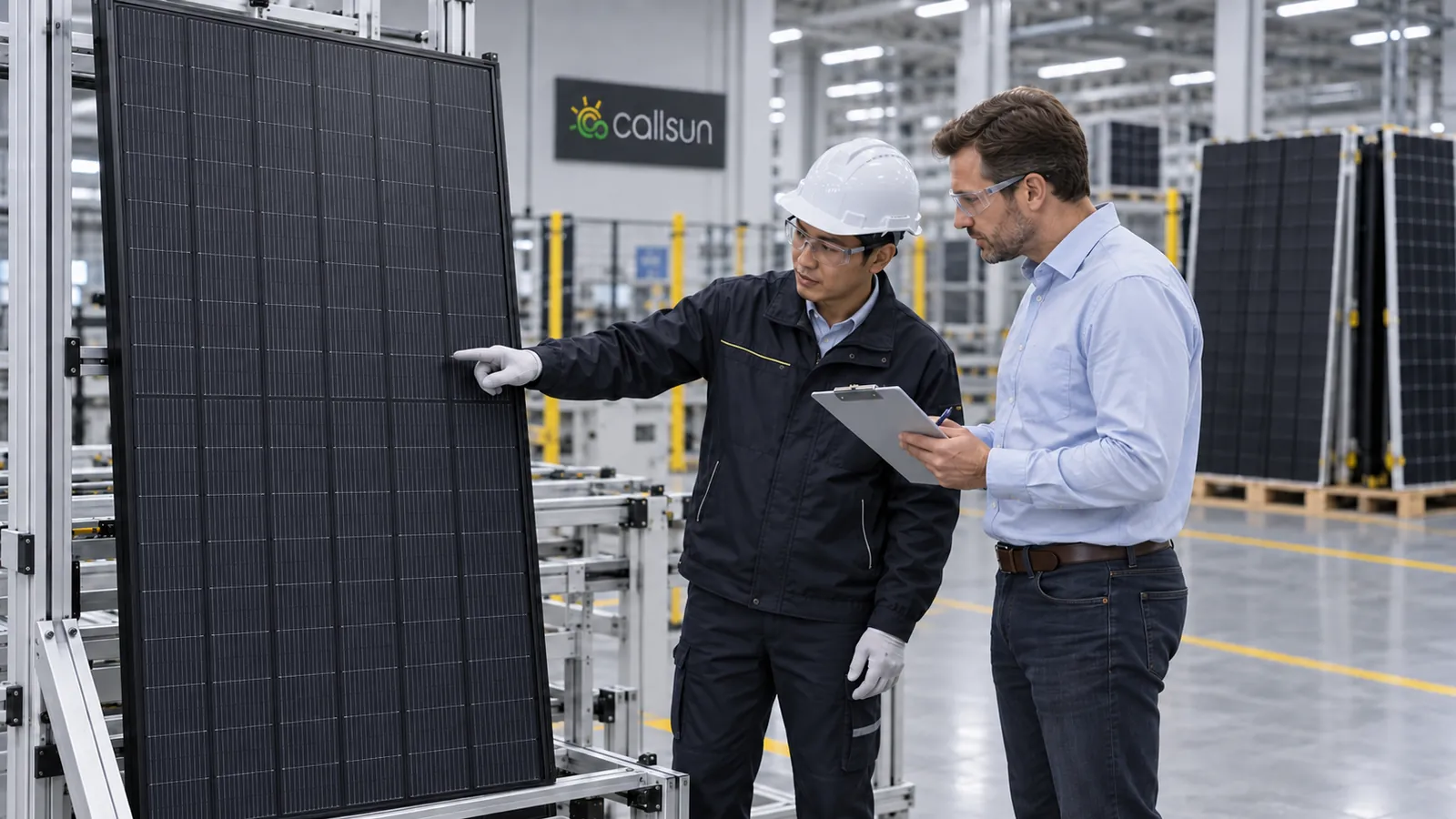
For a retail customer, choosing a solar panel may begin and end with product specifications, reviews and price. For a distributor, equipment manufacturer, EPC or project buyer, the decision is more complex. The supplier must be able to reproduce approved performance across a batch, control materials and processes, respond to technical requirements, provide test evidence and deliver according to plan.
A factory tour can be helpful, but rows of machinery do not automatically prove manufacturing control. A polished sample does not prove batch consistency. A willingness to customize does not prove that a custom design can pass validation or move into repeatable production.
The following questions help buyers distinguish a product source from a long-term manufacturing partner.
1. Is the Supplier a Manufacturer or an Integrator?
The first step is to understand which processes the supplier controls directly. Ask where the modules are designed, assembled and tested; which components are manufactured internally; which are sourced; and who is responsible for quality decisions. A credible supplier should explain its manufacturing boundary clearly rather than imply that every component in a broader solar system is made in-house.
Callsun’s core manufactured products are photovoltaic modules. Its related capabilities include non-standard module engineering, cables, aluminum frames, injection-molded parts and selected structural support. When a reference solar system includes batteries, inverters, controllers or other equipment from qualified partners, those sourcing and warranty boundaries should be stated clearly. This transparency allows customers to evaluate the complete offer accurately.
2. Can the Factory Control Standard Production at Scale?
For standard PV modules, buyers should review how key production stages are controlled and recorded. Important processes include cell cutting, stringing, layup, lamination, framing, junction-box installation and electrical inspection. Ask where automated control is used, where operators make quality decisions and how process deviations are identified.
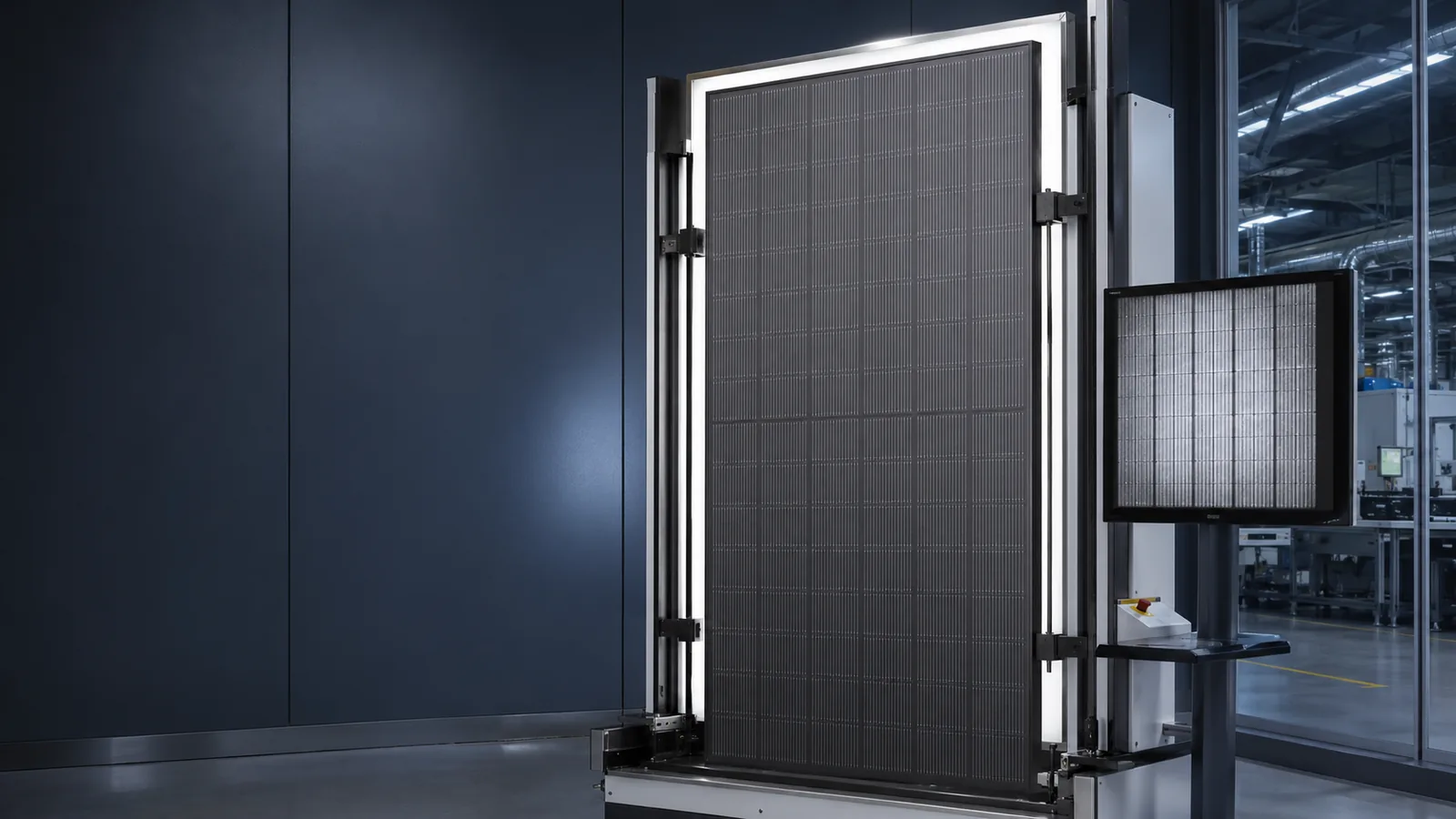
Callsun combines automated standard-module production with in-process inspection. Vision-assisted positioning supports alignment during layup. Controlled lamination helps maintain the specified process window. EL inspection is used during production and again at the finished-product stage to identify cracks, inactive areas or connection issues that may not be visible externally. I–V testing verifies electrical output at the end of production.
The important question is not whether each machine exists. It is whether the processes work together to maintain repeatability across production lots.
3. Does Customization Follow an Engineering Process?
For an application-specific or equipment-integration project, custom PV module requirements should be examined carefully. Changing a frame color is different from developing a new module size, electrical layout or material structure. Buyers should ask how the supplier evaluates feasibility, confirms electrical parameters, selects materials, builds samples, tests the design and approves it for volume production.
A sound process begins with the use case: available dimensions, target output, system voltage, shading pattern, environmental exposure, structural requirements, certification needs and order volume. The design should then move through sample production, performance testing and process validation. This prevents an attractive prototype from becoming an unstable production product. The production differences between standard and custom solar panels also determine which validation steps matter most for a given project.
4. Is Quality Checked Throughout Production—or Only at the End?
Final inspection is necessary, but it cannot replace process control. Defects are easier to understand and correct when inspection is connected to the stage where they may be introduced. Buyers should ask which parameters are monitored in process, how nonconforming material is isolated and whether product records can be traced to production and test results.
EL and I–V inspection are particularly important in module production. EL imaging can reveal internal cell and interconnection conditions that an external visual check cannot. I–V testing confirms the module’s electrical performance. Used together with visual, dimensional and process checks, these methods create a more complete quality record.
5. Can the Manufacturer Verify Reliability Beyond Rated Power?
A module’s rated output is measured under standardized conditions, while its working life is shaped by heat, humidity, ultraviolet exposure, mechanical loads, transport, salt mist and repeated environmental cycles. The relevant risks vary by application: marine products face salt and moisture; rooftop modules face wind and snow loads; mobile products experience vibration and impact; utility projects require long-term consistency across large quantities.
A capable laboratory should support electrical performance, electrical safety, environmental durability, mechanical loading, material evaluation and transport-related testing. Buyers should ask which tests are available, which standards or internal methods are used, how samples are selected and whether the supplier can provide records relevant to the project.
Testing is most valuable when it informs material selection, sample approval and process improvement—not when it is used only as a showroom demonstration.
6. Can the Supplier Support Documentation and Traceability?
B2B procurement depends on information as much as hardware. Technical datasheets, bills of materials where applicable, test reports, certification documents, packaging specifications, inspection records and change-control procedures help buyers manage product approval and downstream obligations.
Traceability should connect the finished product to relevant manufacturing and test information. For custom programs, both parties should also agree on the approved specification, acceptable tolerances and the process for future changes. Clear documentation reduces ambiguity when orders scale or teams change.
7. Does Capacity Match the Delivery Promise?
Production capacity should be assessed in relation to the actual product, quantity and delivery schedule. Standard and non-standard modules do not move through identical production routes, and a factory’s total capacity does not automatically equal available capacity for a particular order. Ask how the supplier plans materials, samples, production slots, quality inspection, packaging and shipment.
Callsun operates an approximately 592,000 square feet (55,000 square meters) manufacturing base with parallel capabilities for automated standard modules and flexible non-standard production. Multi-region manufacturing and overseas warehousing support can improve supply flexibility, but each program still requires a realistic plan based on product complexity, certification, order volume and destination market.
8. Are Commercial and Technical Boundaries Clear?
A reliable partner should be precise about product scope, third-party equipment, certifications, warranties, installation responsibilities and local compliance. This is especially important when modules are offered as part of an application-oriented reference system. The module manufacturer may support component selection and parameter matching without being the manufacturer or warranty provider for every inverter, battery or protective device.
Clear boundaries do not weaken an offer. They make it credible and give distributors, installers and project customers the information needed to manage risk.
Verification Checklist: What to Check, Ask and Request
The table below condenses the questions above into checkpoints buyers can use during supplier evaluation. The evidence column describes general forms of verification; the exact documents available depend on the model, configuration and program.
| What to Check | Questions to Ask | Relevant Evidence |
|---|---|---|
| Production control | Which production stages are handled in-house, and where do EL and I–V checks sit in the process? | Process descriptions, in-process and final inspection records applicable to the model |
| Custom engineering | How are feasibility, sample approval and production validation sequenced? | Approved specifications, sample validation plans, agreed tolerance and change process |
| EL inspection | What does the EL check verify, and when is it performed? | EL inspection reports or records for the relevant production stage |
| I–V testing | How is rated performance verified before release? | I–V test results or flash-test records for the model |
| Sample vs. batch | How do you confirm that approved sample results carry into volume production? | Batch consistency procedures, outgoing inspection criteria, relevant production records |
| Documentation | Which datasheets, test reports and certificates apply to this exact model and market? | Model-specific datasheets, test reports, certification documents |
| Change control | How are specification or process changes communicated and recorded? | Change-control procedure and documented update history where available |
The exact scope of records a supplier can share should be confirmed during the program; this checklist does not imply that all internal production records are publicly available.
A Better RFQ Produces a Better Technical Response
Before requesting a quotation, prepare the target market, application, installation dimensions, module power range, electrical parameters, environmental conditions, certification requirements, sample quantity, forecast volume and delivery expectations. For custom products, include drawings, photographs and information about the connected system. The commercial side of the decision — quotations, packaging, logistics and delivery arrangements — is covered in How to Choose a Solar Panel Manufacturer for Wholesale and Project Supply.
These details allow the manufacturer to distinguish between an existing product, an adapted platform and a new engineering project. They also create a stronger basis for comparing quotations that may otherwise appear similar.
Evaluate Callsun for Your Next Program
Callsun supports distributors, installers, EPCs, equipment manufacturers and project buyers with standard high-power PV modules, non-standard module engineering, testing and production support. Share your product or project requirements with our team to begin a technical and manufacturing assessment.
Tagged
Next step
Start a supplier evaluation with Callsun.
Share your product or project requirements—target market, application, module power range, certifications and forecast volume—to begin a technical and manufacturing assessment.
Begin supplier assessmentContinue Reading