Technical
450W vs. 400W Solar Panels: What 50 Extra Watts Mean for the Complete Installation
A B2B guide for distributors, EPCs and project buyers on how 450W modules change array capacity, electrical design and project economics compared to 400W.
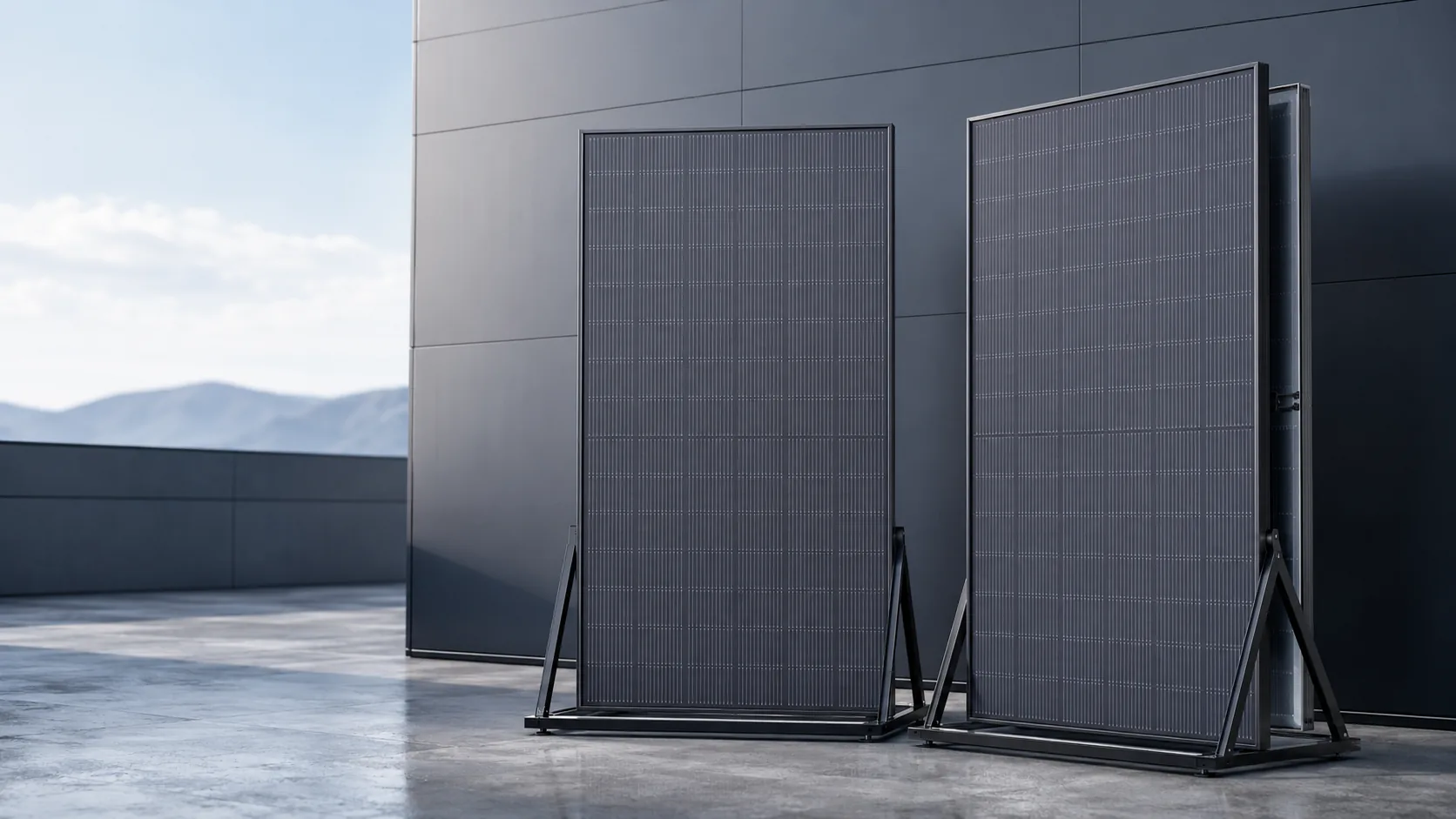
A 450W solar module produces 50 more rated watts than a 400W module. That statement is correct, but it is not yet useful. For a distributor, installer, system integrator or project buyer, the more important question is what those additional watts do at array level.
If the higher-power module fits the same planned module positions and remains compatible with the electrical design, the gain is repeated across every panel in the array. Five 400W modules provide 2.0kW of nameplate capacity. Five 450W modules provide 2.25kW. The difference is 250W without adding a sixth module position. Across ten modules, the difference becomes 500W. Across one hundred modules, it becomes 5kW.
This is where module power becomes a space and project-planning decision rather than a single-product comparison.
Start with the Complete Roof, Not the Single Module
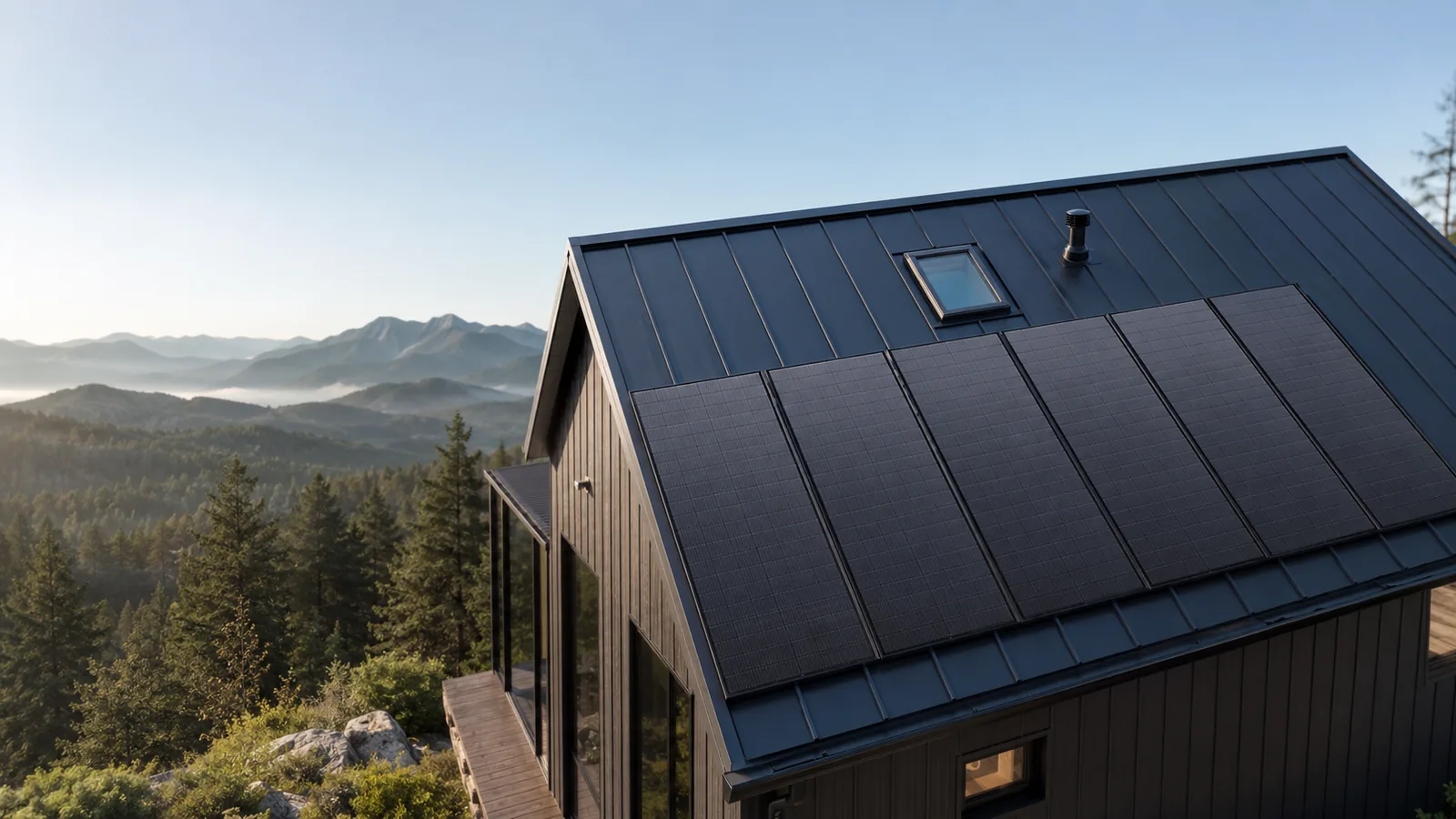
Solar installations are constrained by usable area. Roof edges, access paths, skylights, vents, air-conditioning equipment, structural zones and fire setbacks can reduce the number of positions available for modules. Once those positions are fixed, increasing the output of each usable position may be more practical than trying to create additional roof area.
The same logic applies beyond conventional rooftops. An off-grid cabin may have only one suitable roof plane. A workshop or garage may have a modest footprint but meaningful daytime loads. A vehicle or equipment platform may offer a fixed mounting area. Small commercial buildings may need to extract more capacity from a roof already divided by HVAC equipment.
Five module positions: 5 × 400W = 2.0kW. The same five positions at 450W = 2.25kW. That is 250W of additional nameplate capacity from the same number of modules.
The Calculation Is Simple. The Decision Is Not.
| Number of modules | 400W array | 450W array | Additional capacity |
|---|---|---|---|
| 5 | 2.0kW | 2.25kW | 250W |
| 10 | 4.0kW | 4.5kW | 500W |
| 20 | 8.0kW | 9.0kW | 1.0kW |
| 100 | 40kW | 45kW | 5.0kW |
These figures describe rated capacity under standard test conditions. They do not predict exact energy yield. Actual generation depends on solar irradiance, temperature, module orientation, shading, wiring, inverter or controller efficiency, system downtime and local climate. The table is useful because it isolates one question: how much nameplate capacity can the same number of module positions carry?
Compare Dimensions and Efficiency Before Wattage
A 450W module is not automatically the better choice if it is substantially larger than the 400W alternative and fewer modules fit. Buyers should compare module dimensions, area, conversion efficiency, layout and the resulting array capacity. The best comparison is not “450 is greater than 400,” but “how many watts can be installed in the actual usable area?”
Callsun’s high-power module platform uses N-type cell technology and reaches conversion efficiency of up to 25.6%, depending on the specific product configuration. Higher efficiency can support more rated power within a controlled module footprint, but the exact module datasheet and installation drawing should always be reviewed together.
Module format also affects handling, roof access, mounting rails and labor. A product that offers attractive power density but cannot be transported safely, positioned on the roof or matched to the mounting structure may not create a better project outcome.
Check Electrical Compatibility at Array Level
Power is only one part of the electrical design. The module’s open-circuit voltage, voltage at maximum power, short-circuit current and operating current must remain within the limits of the selected inverter, MPPT controller, combiner equipment and protection devices. Cold-weather voltage correction and string length are particularly important when modules are connected in series.
A higher-power module can increase array capacity without increasing module count, but the complete string and input design still requires verification. For off-grid systems, buyers must also consider the controller’s voltage and current limits, battery architecture, daily energy use and required charging window.
Where 450W Creates the Clearest Value
The strongest use cases are installations in which module positions are limited but each position can accommodate the 450W format. These include residential roofs with a fixed layout, off-grid cabins, garages and workshops, small commercial roofs with equipment obstructions, and ground-mounted systems seeking higher capacity from a defined structural plan.
For distributors, a 450W product can also create a clearer high-power tier within the portfolio. It should not replace every lower-power module. Smaller modules remain relevant where dimensions, weight, voltage or handling conditions require them. Product architecture works best when each wattage class has a defined role.
Look Beyond Day-One Output
B2B buyers should also review degradation terms, product warranty, mechanical design, environmental testing and manufacturing consistency. More rated capacity at installation is valuable only when the product is engineered and manufactured for stable long-term operation.
Callsun supports standard high-power module production through controlled cell processing, stringing, layup, lamination, framing, in-process EL inspection, final EL inspection and I–V testing. Its approximately 55,000-square-meter manufacturing base combines automated standard-module production with flexible engineering support for non-standard applications.
A Better Way to Compare 400W and 450W
Begin with the usable installation area. Build a real module layout. Calculate how many units of each format fit. Compare total array capacity, electrical compatibility, mounting and handling requirements, expected operating conditions and project cost. Only then does the 50W difference become meaningful.
Share your available dimensions, target capacity, system voltage, market and estimated order volume with Callsun. Our team can help evaluate whether a 450W high-power module or another module format is the more practical choice for your application.
Tagged
Next step
Plan a 450W module rollout with Callsun.
Share your available dimensions, target capacity, system voltage, market and estimated order volume. Our team can help evaluate whether a 450W high-power module or another format is the more practical choice for your project.
Request a module evaluationContinue Reading