Technical
Solar Design for Limited Installation Space: Why Power Density Matters More Than Panel Wattage
Why B2B solar buyers should compare module efficiency, power density and shading behavior—not just nameplate wattage—when installation space is constrained.
Solar modules are commonly compared by wattage. The number is easy to understand, easy to place on a product sheet and useful when two products are evaluated under the same test conditions. But wattage alone does not tell a buyer how much power can actually be installed on a roof, vehicle, vessel, balcony or small commercial building.
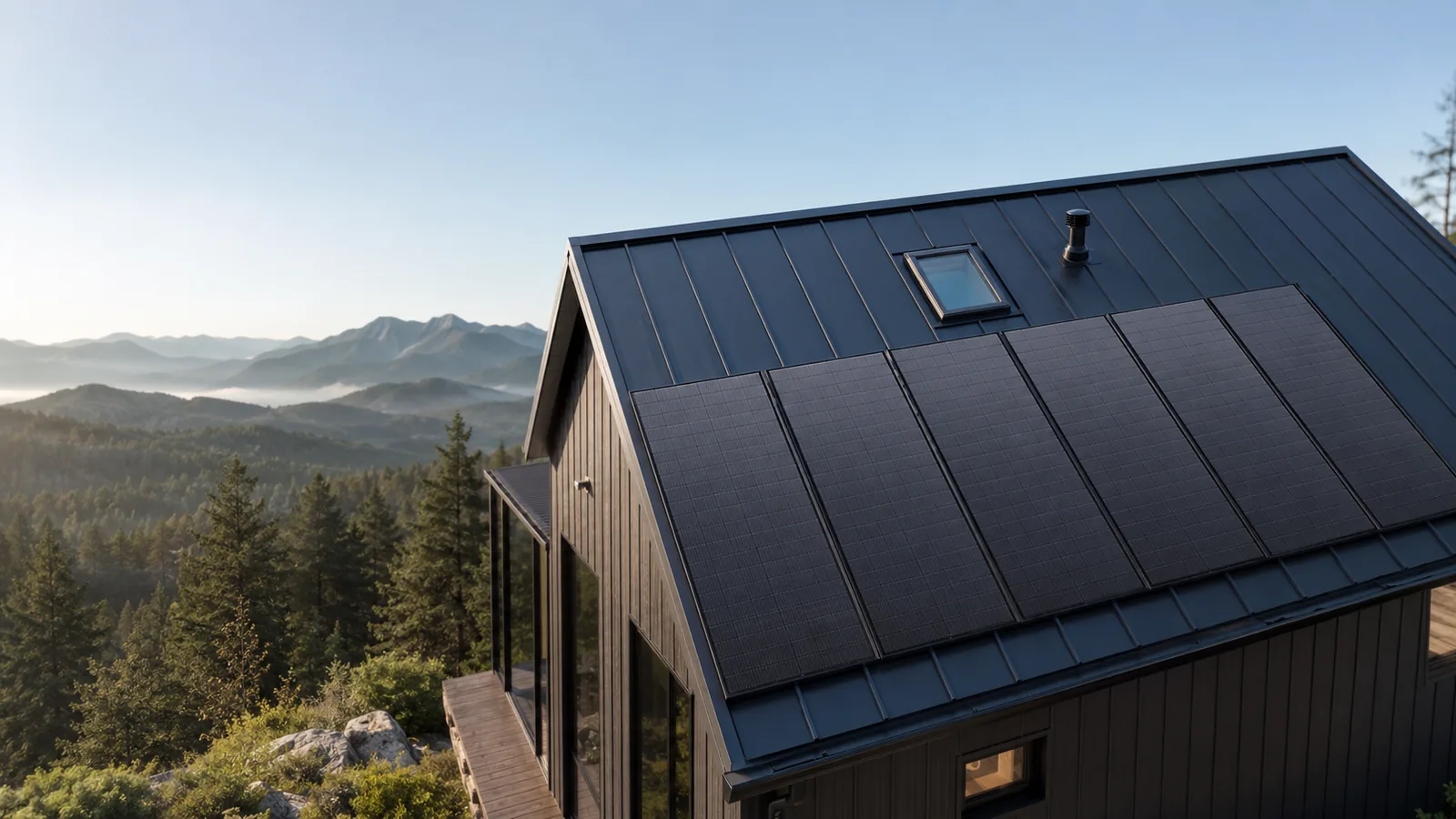
Real installation space is rarely a clean rectangle. Roof vents, air conditioners, chimneys, walkways, railings, access zones and structural setbacks divide it into smaller usable areas. Module dimensions determine how many panels fit. Efficiency influences how much rated power each area can carry. Shading behavior affects how much of that power remains available during real operation. Electrical parameters determine whether the proposed array can work with the rest of the system.
This is the thinking behind Callsun’s product direction: Engineered for More Power in Less Space. It is not a promise that the physically largest module is always better. It is an engineering principle for creating more usable power from a constrained installation.
Nameplate Wattage Is Only the Starting Point
A 450W module produces more rated power than a 400W module, but a meaningful comparison must also consider dimensions. If both products occupy a similar footprint, the 450W option can increase total array capacity without expanding the installation area. Five 400W modules provide 2.0kW of rated capacity; five 450W modules provide 2.25kW. The additional 250W comes from the same number of module positions.
The conclusion changes if the higher-wattage product is substantially larger and fewer modules fit. This is why professional buyers should compare module efficiency, power per unit area, actual roof layout and the number of installable modules—not just the largest wattage printed on a datasheet.
For residential and small commercial roofs, this can affect total system capacity. For RVs and vessels, a few centimeters may decide whether a module fits between fixed equipment. For large solar projects, higher module power and efficiency can influence land use, mounting quantities, cable requirements and installation planning. The value of power density changes by application, but the underlying question is the same: how much complete-system capacity can the available space support?
Usable Space Is Different from Total Space
A roof may measure 30 square meters, but not all 30 square meters are available for modules. Required setbacks, maintenance access, roof geometry and permanent equipment reduce the usable area. The remaining sections may not match conventional module proportions.
In these cases, the best result may come from combining high-power standard modules with non-standard formats designed for smaller or irregular areas. A custom module should not be used where a standard module already works efficiently, but it can turn otherwise unused space into productive capacity when dimensions, output position and electrical characteristics are engineered together.
This distinction is especially important in RV, marine, balcony and equipment-integrated applications. The goal is not to cover every surface at any cost. The goal is to use the available surface intelligently while respecting weight, structure, airflow, access, safety and installation requirements.
Rated Power Versus Usable Power
Even a well-designed layout operates outside ideal laboratory conditions. Module temperature, orientation, irradiance, cable losses, controller efficiency and inverter operating range all affect output. Partial shading can be particularly important when an air conditioner, mast, chimney or tree repeatedly covers the same area.
In a conventional series-connected cell layout, shading one section can restrict current through a larger electrical region. Bypass diodes protect the affected section and allow current to take another path, but the internal electrical zoning determines how much of the module remains active. For installations with predictable partial shade, a module designed with more appropriate electrical subdivisions and bypass paths may preserve more usable output than a conventional design under the same condition.
This does not mean that any “anti-shading” module will deliver a fixed advantage in every situation. Shade position, direction, intensity, duration and system configuration all influence the result. Performance claims should be supported by comparison tests using the same controller, storage device, cable, test period and shaded area.
More power should mean more installable capacity, more usable output under real conditions and fewer avoidable system losses—not simply a larger number on the label.
Three Engineering Routes to Higher Space Value
Callsun applies the limited-space principle through three product routes. High-efficiency standard modules increase rated capacity where standard formats fit. Non-standard modules adapt dimensions, cell arrangement and connection details to areas that conventional products cannot use efficiently. Application-specific electrical designs address predictable partial-shading conditions where preserving usable output matters more than maximizing nameplate wattage alone.
These routes are relevant across different markets. RV and marine partners may focus on fitting around fixed equipment. Off-grid cabin customers may need to maximize generation on a small roof while keeping module parameters compatible with the charge controller and battery system. Residential and small commercial installers may seek more array capacity from a restricted roof. Utility-scale buyers may examine how module efficiency and power class affect land, structure and balance-of-system requirements.
How B2B Buyers Should Compare Modules
A useful comparison should begin with the installation drawing and include module dimensions, rated power, efficiency, power density, allowable mounting area, expected shading, environmental loads and electrical compatibility. Buyers should then calculate the number of modules that fit, the resulting array capacity and the system constraints that may reduce real output.
For non-standard projects, the discussion should also include minimum production volume, sample validation, certification scope and the extent to which a modified design can be manufactured repeatedly. The most valuable module is the one that fits the application technically, economically and operationally.
Turn Space Constraints into a Product Brief
Send Callsun your available dimensions, installation drawings, target power, voltage requirements, shading conditions and expected order volume. Our team can help assess whether a high-power standard module, a non-standard format or an application-specific electrical design offers the strongest route to more usable power from the available space.
Tagged
Next step
Turn a space constraint into a module brief.
Send Callsun your dimensions, target power, voltage requirements, shading conditions and order volume. Our team can help identify the strongest route to more usable power from the available space.
Request a module design reviewContinue Reading