Industry
Factory Rooftop Solar Projects
Explore selected Callsun factory rooftop solar project references and learn what commercial PV buyers should consider in module selection, quality control and project supply.
Factory rooftops offer substantial space for distributed solar generation, but the size of a building alone does not determine how a PV system should be planned.
Roof structure, usable installation area, skylights, ventilation equipment, access routes and electrical design all affect the final layout. Two factories with similar roof areas may require different module arrangements, installation zones and supply plans.
This portfolio brings together selected factory rooftop solar project references from Callsun. Project names, locations and individual system details are not disclosed. Rather than presenting each site as a separate case study, the projects are grouped to show several common factory-rooftop configurations and the practical considerations behind commercial and industrial PV module supply.
Large, Continuous Factory Roofs
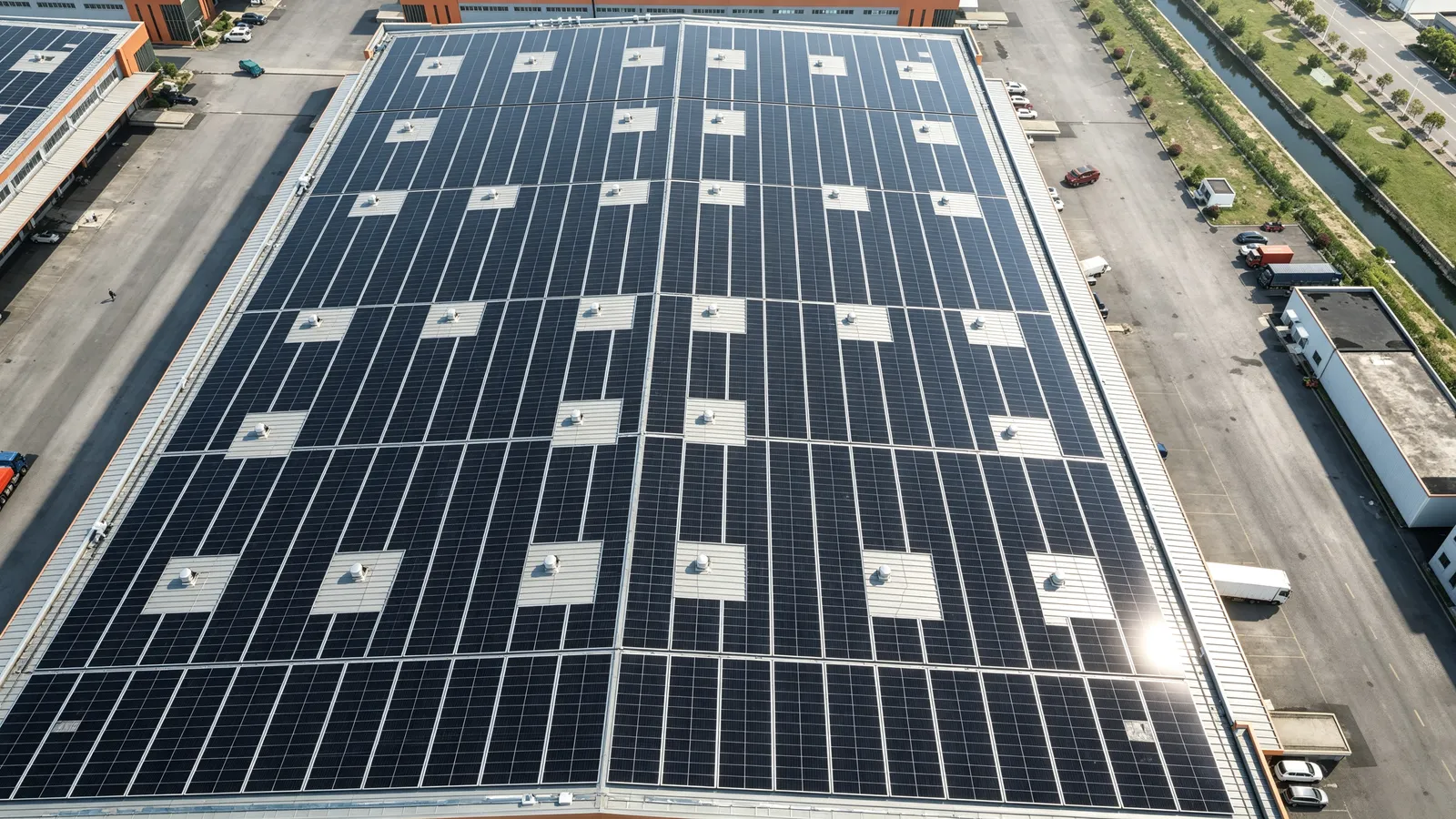
Some industrial buildings provide large and relatively continuous roof areas. These sites can support extensive module arrays and regular row layouts, but a large surface should not automatically be treated as fully usable installation space.
The layout must still account for roof edges, structural zones, drainage, access requirements, rooftop equipment and any areas that need to remain clear. The orientation and spacing of module rows also need to fit the mechanical and electrical design of the project.
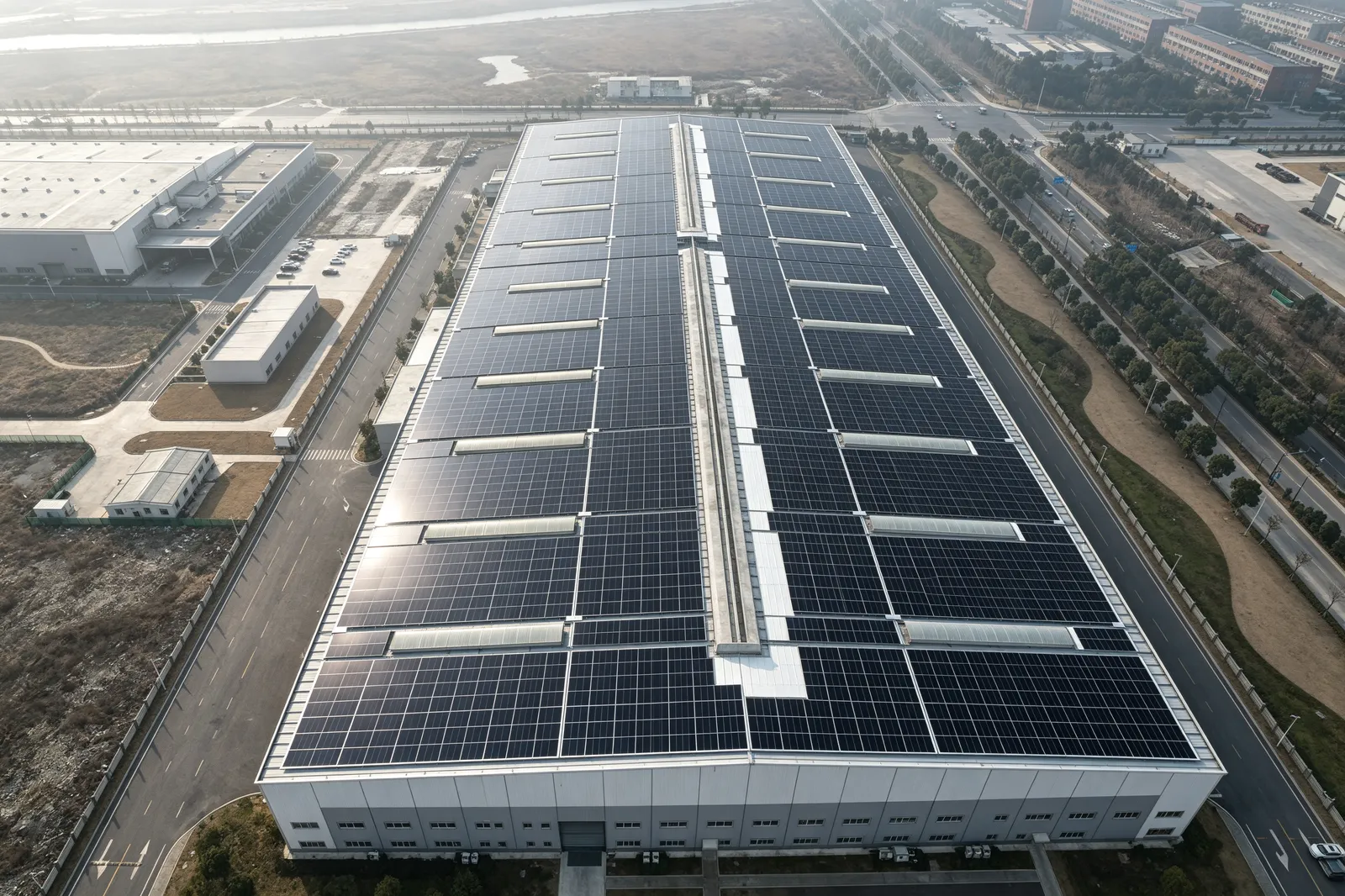 PV array installed across a large continuous industrial roof
On large factory rooftops, small differences in module dimensions can become significant when repeated across many rows. A module that appears suitable based on rated power may produce a different overall layout once its length, width, frame and required installation spacing are considered.
This is why module selection should begin with the usable roof area and the planned array configuration rather than with the highest available wattage.
Rooftops with Skylights and Reserved Areas
Many factory roofs are divided by skylights, ventilation openings, service areas or other structures. These interruptions create separate installation zones and reduce the amount of continuous space available for modules.
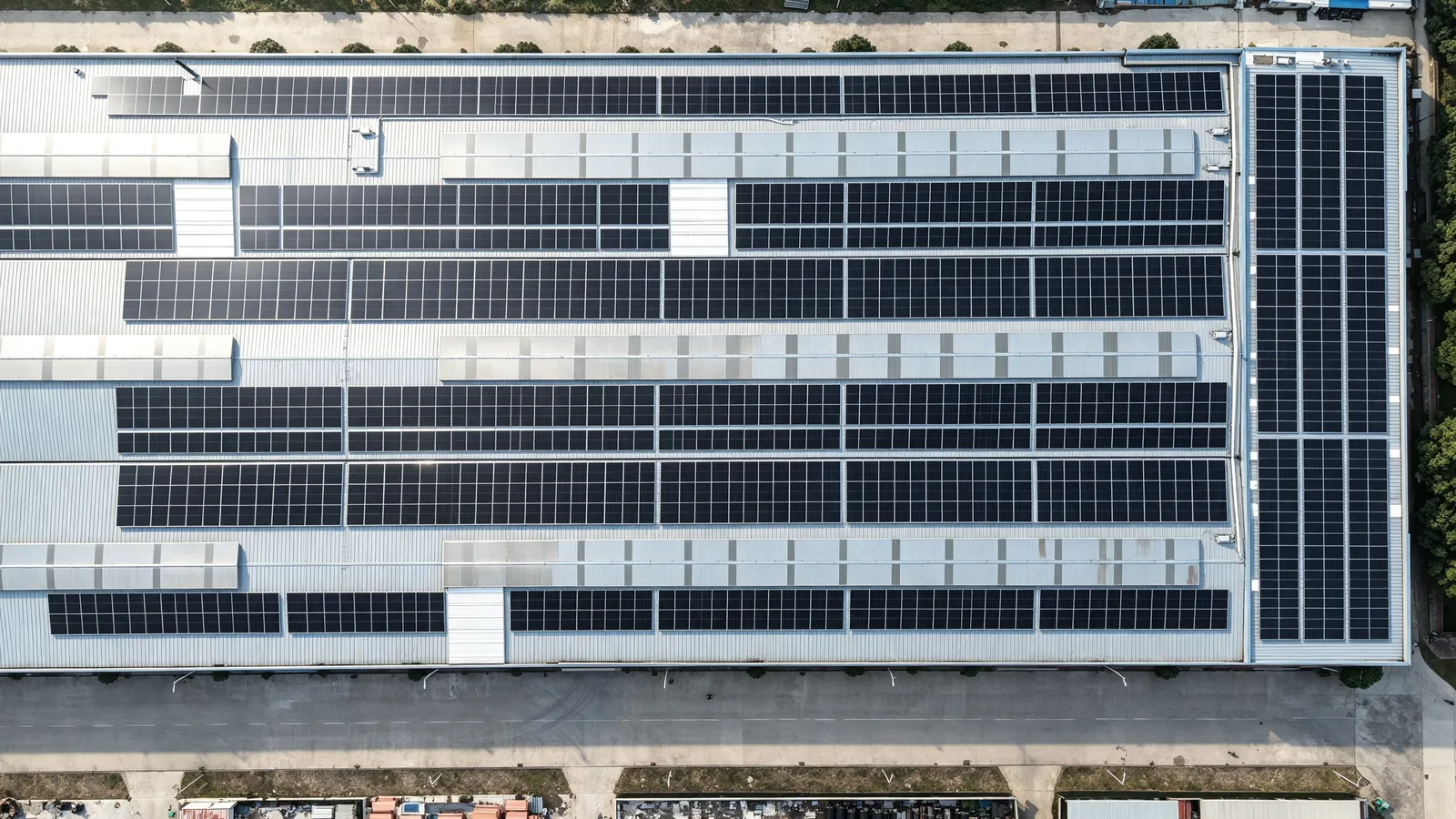
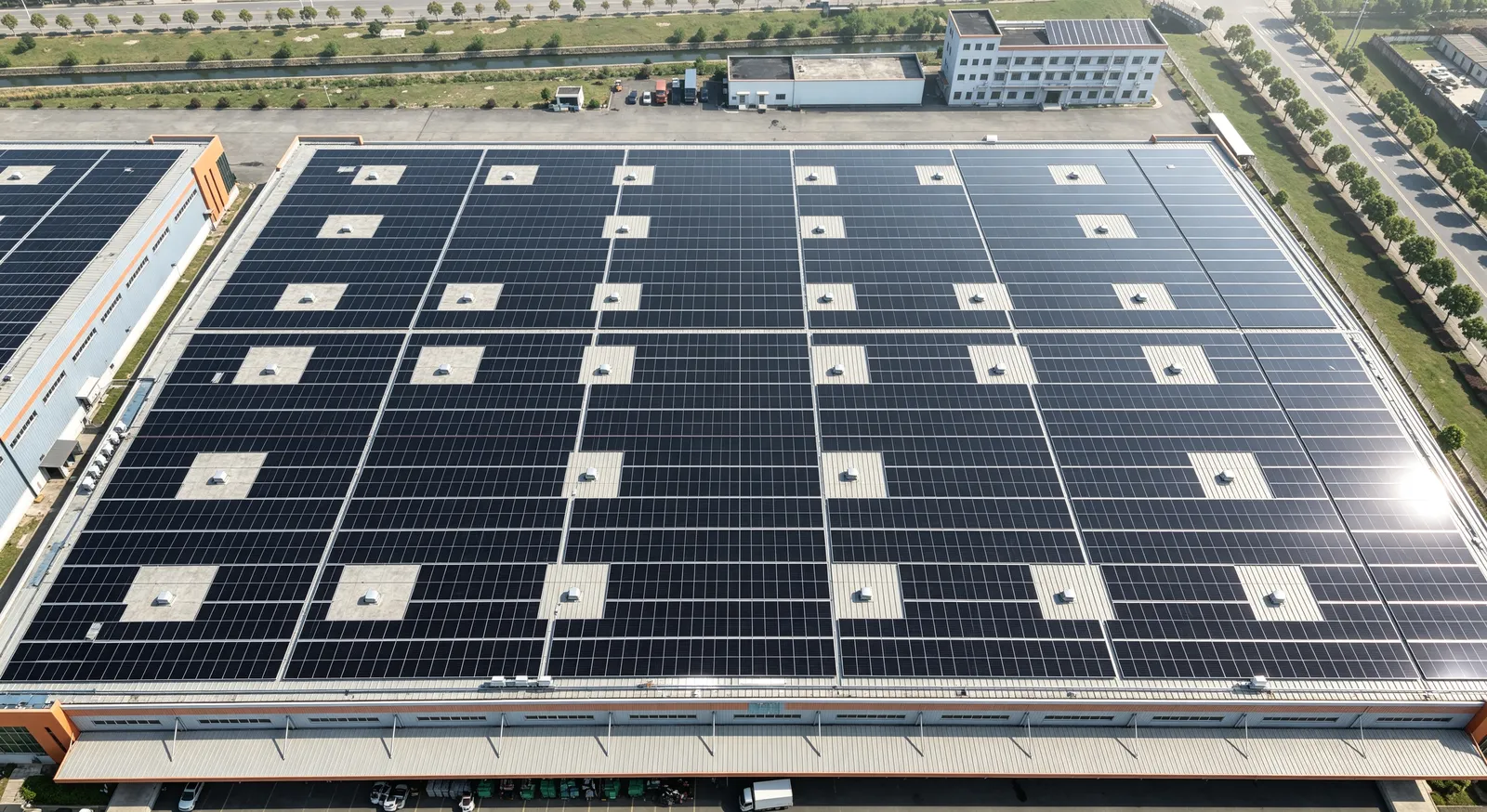 Factory rooftop PV layout arranged around skylights and reserved areas
The project image above shows how arrays may be arranged around existing rooftop features instead of covering the complete roof surface. Clear separation between module areas and reserved zones can also help maintain access for inspection and maintenance.
For module procurement, this means the building’s total roof area is not sufficient for product selection. The actual dimensions of each usable zone need to be considered together with module size and target capacity.
A higher-power module may help reduce module count in some projects, but only when its physical dimensions allow it to fit the available zones. In other cases, a different module format may produce a more practical layout even if the rated power of each module is lower.
Final structural design, installation spacing and access requirements must be confirmed by the appropriately qualified project parties according to the site conditions and applicable local requirements.
Factory Roofs Divided into Multiple Installation Zones
Some industrial rooftops cannot support one continuous array. Modules may need to be divided across several roof sections because of building structure, rooftop equipment or the shape of the available space.
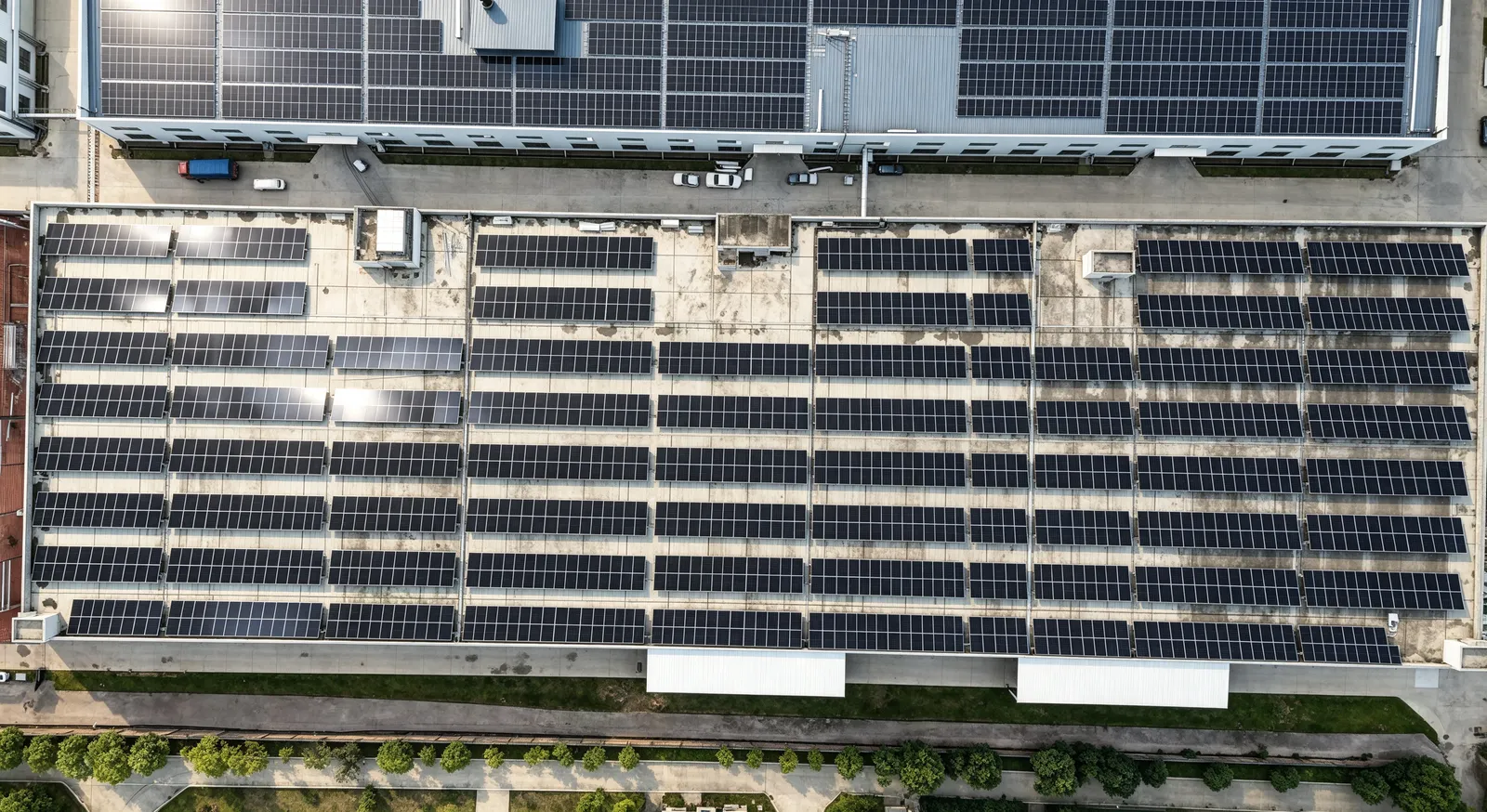 Solar modules distributed across separate rooftop installation zones
These projects require more than a total-capacity calculation. Each installation zone may have a different available area, module count or cable-routing requirement. The complete array must still remain compatible with the planned electrical system.
Before modules are confirmed, installers and system providers should review the proposed dimensions, electrical parameters, string configuration and installation conditions. Where several roof zones are involved, product consistency and model-specific documentation also become important.
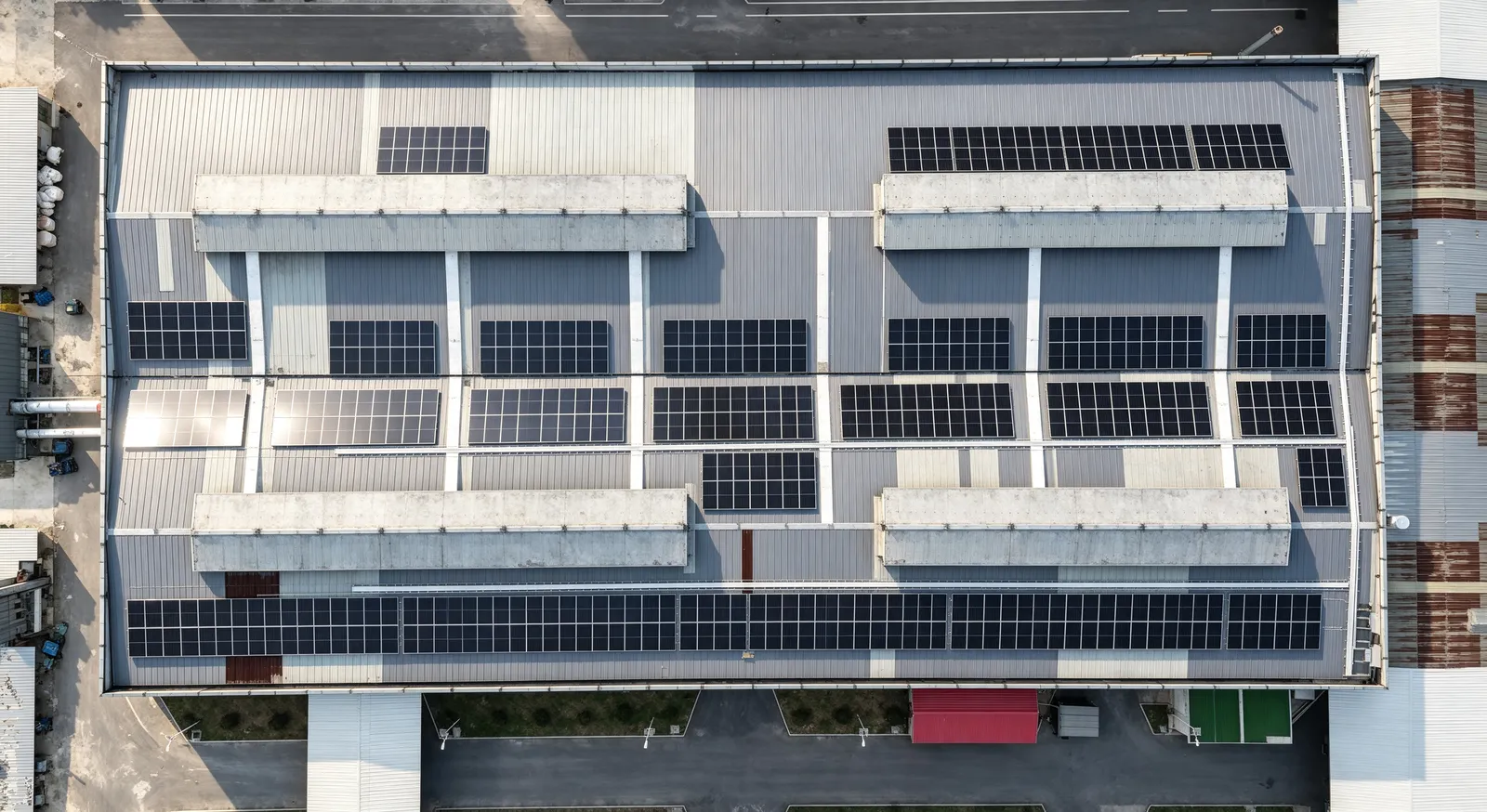 Rooftop PV layout shaped by available installation areas
Using a defined standard-module portfolio can simplify this process. It gives the project team a clearer basis for comparing module dimensions, electrical characteristics and installation requirements across multiple areas of the same roof.
Module Selection for Factory Rooftop Projects
Rated wattage is important in commercial and industrial PV projects, but it should not be assessed separately from module size, electrical design and usable roof area.
A larger module may reduce the number of panels needed to reach a target system capacity. It may also change row length, handling requirements, mounting layout and string design. The benefit therefore depends on whether the module fits the actual project.
The starting information for product selection should include the target power class, available installation area, proposed module dimensions, electrical requirements, installation method, operating environment, order volume and destination market.
Callsun’s current standard PV module portfolio covers 450W, 580W, 620W and 720W power classes for applications including distributed PV and small commercial and industrial projects.
These power classes provide different options for project evaluation, but a particular model should not be selected solely because it offers higher output per module. Its dimensions and electrical characteristics must be checked against the roof layout, inverter design and other system requirements.
Consistency Matters Beyond the Datasheet
Once a module has been approved for a factory rooftop project, the agreed specifications need to be transferred into production and maintained through volume manufacturing.
For project buyers, consistency is not limited to rated power. Module dimensions, electrical characteristics, frame construction, connectors, cables, labeling and packaging may all affect installation and delivery.
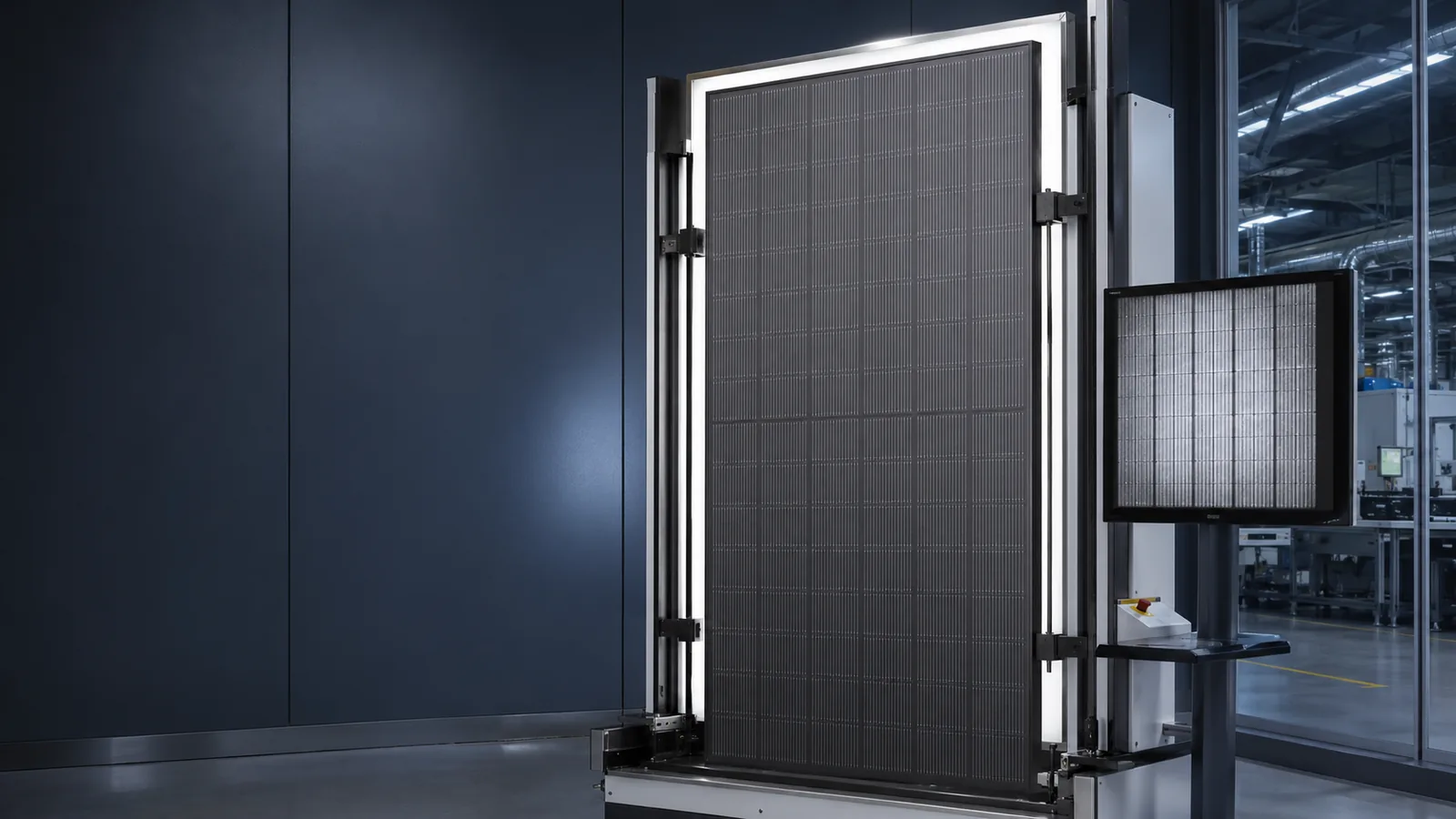
Callsun uses fully automated production for standard PV modules. The production process covers non-destructive cell cutting, multi-busbar string welding, in-process EL inspection, vision-guided layup, controlled high-temperature vacuum lamination, automated framing and final EL and I-V testing.
In-process EL inspection helps examine cell and internal-connection conditions before the module completes the main assembly stages. Final EL inspection provides another check after lamination and framing. I-V testing records output power, voltage, current and the I-V curve under controlled test conditions before product release.
These inspections serve different purposes and form part of a broader manufacturing-control process. They do not replace site design, system commissioning or long-term operating assessment.
Documentation Should Follow the Exact Module
Commercial and industrial projects may involve several parties, including the project owner, distributor, system designer, installer and module supplier. Clear product documentation helps these parties work from the same technical reference.
Before an order is confirmed, buyers should review the datasheet, dimensions, electrical parameters, mechanical construction, connector information and applicable documents for the exact module being purchased.
Information associated with one product model should not automatically be applied to another model in the same power range. This is especially important when different frame, glass or electrical configurations are available.
The destination market and installation conditions also need to be considered. Local electrical requirements, structural standards, permitting conditions and final system approval remain the responsibility of appropriately qualified professionals in the relevant market.
Project Supply Begins Before Shipment
A factory rooftop project does not move directly from module selection to delivery.
The buyer and supplier need to confirm the selected product, order quantity, packaging, shipping method, destination, required documents and delivery conditions. These discussions should take place before the order enters the final supply stage.
Packaging also needs to correspond to the product specification. Appropriate handling, inspection and packaging help reduce the risk of damage before the modules reach the installation site.
Callsun’s manufacturing and supply network spans China, Vietnam, Indonesia, Saudi Arabia and other regions. Warehousing and logistics resources support markets including the United States, the United Kingdom, Germany, Australia, Canada and Japan.
Actual production location, product availability, shipping arrangement and delivery conditions must still be confirmed for each order. A multi-regional network should not be interpreted as guaranteed local availability for every model.
What Factory Rooftop Projects Require from a Module Supplier
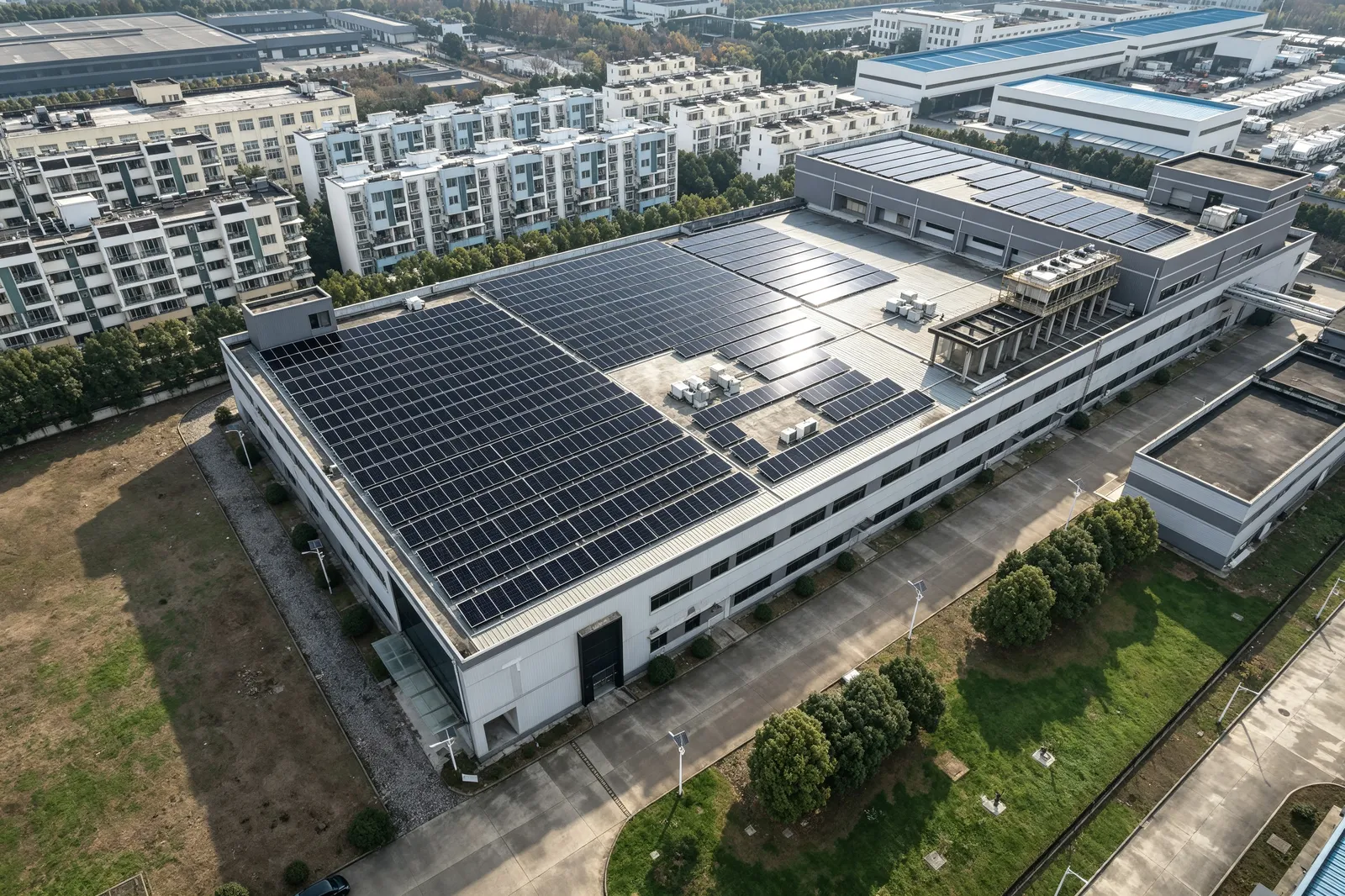 Overview of an industrial factory rooftop solar project
The project references in this portfolio show that factory rooftops do not follow one universal layout. Some provide large, continuous installation areas, while others are divided by skylights, equipment, access zones or separate roof structures.
For module buyers, the practical lesson is that product selection and supply planning need to begin with the project conditions.
A suitable module supplier should be able to review the required power class, module dimensions, electrical parameters, installation conditions, order requirements and destination market. The supplier should also provide model-specific documentation and maintain the agreed product requirements through production and final inspection.
Callsun supports distributors, installers, system providers and project buyers with standard-module selection, technical-parameter confirmation and volume delivery. Our role is to provide accurate product information and manufacturing support while keeping system-design and installation responsibilities with the qualified project parties.
Tagged
Next step
Planning a factory rooftop solar project?
Share your target power class, available installation areas, electrical requirements and destination market - Callsun will support module selection, technical documentation and volume supply.
Contact Callsun