Technical
Solar Panel Kits with Battery and Inverter
Compare solar panel kits with battery and inverter for project procurement. Review operating modes, sizing, compatibility, included equipment and quotations.
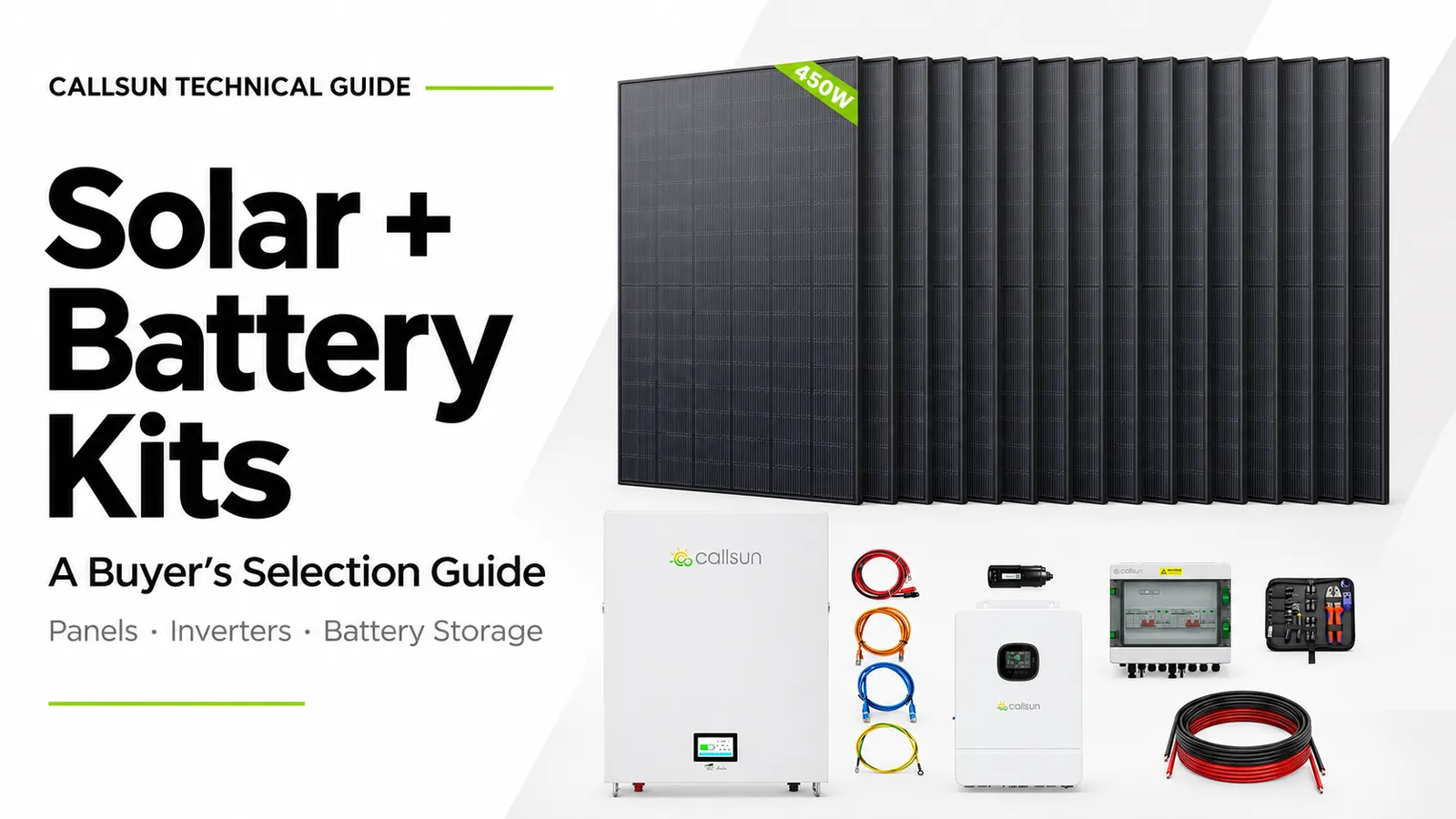
Selecting a solar panel kit with battery and inverter involves more than comparing package wattage and price. For installers, distributors and project buyers, the equipment must suit the intended operating mode, support the required loads and arrive with a clearly defined scope of supply.
Two packages with similar solar capacity can differ substantially in inverter output, battery energy, grid interaction, installation requirements and included accessories. A useful comparison starts with the project requirements and the exact equipment configuration.
This guide explains what to check before requesting or approving a solar-and-battery system quotation, using CALLSUN’s off-grid and hybrid configurations as examples.
Define How the System Will Operate
Before comparing equipment, establish whether the project requires independent off-grid power, backup power with utility support, or grid-connected solar and storage.
These requirements affect inverter selection, wiring, controls and the documents needed for the project.
| Project Requirement | What Buyers Should Confirm |
|---|---|
| Independent off-grid operation | The system can supply designated loads using solar and battery power. |
| Utility charging or bypass | Utility power can charge the battery or supply connected loads through the inverter’s supported modes. |
| Backup during an outage | The supported backup output, switching arrangement and battery limits. |
| Grid-connected operation | The exact inverter supports the intended grid-interactive functions and requirements. |
| Exporting power to the grid | Export capability, settings, certification and utility approval are confirmed for the equipment and location. |
Utility input does not, by itself, establish grid-export capability. An inverter may accept utility power for charging or bypass while serving an off-grid or backup application.
Likewise, “hybrid” is not a complete technical specification. When comparing a hybrid inverter vs. an off-grid inverter, review the actual operating modes, terminals, wiring diagrams and model-specific documentation.
For procurement, describe the required functions explicitly. “Solar and battery backup with utility charging” communicates a different requirement from “grid-connected storage with permitted export.”
Check What the Solar Kit Includes
A complete off-grid solar system typically combines PV modules, an inverter or inverter-charger, battery storage and the equipment needed to connect and protect them.
However, the word “complete” does not define a supplier’s delivery scope. Mounting structures, protection devices, distribution equipment, installation services and site-specific cables may be included, optional or supplied separately.
Request a bill of materials that identifies the equipment and quantities.
| Equipment Group | Details to Confirm |
|---|---|
| Solar panels | Exact model, quantity, rated power, dimensions and electrical specifications. |
| Inverter | Exact model, AC output, supported operating modes, PV inputs and battery requirements. |
| Battery storage | Model, module quantity, nominal energy, approved operating limits and communication requirements. |
| Cables and connectors | Included lengths, conductor sizes, connector types and intended connections. |
| Mounting equipment | Whether panel mounting structures and equipment mounting hardware are included. |
| Protection and distribution | Included disconnects, breakers, protection devices and distribution components. |
For a distributor, a defined package helps establish what can be offered consistently to downstream customers. For an installer, it identifies what still needs to be designed or sourced for the site.
The approved quotation and bill of materials should define the supplied package.
Compare Solar Capacity, Inverter Output and Battery Energy Separately
A system name such as “7.2kW solar kit” may describe the PV array. It does not necessarily describe the inverter’s AC output or the battery’s discharge capability.
Three figures need separate attention:
| Specification | What It Describes | What It Does Not Show |
|---|---|---|
| PV array capacity, kWp | The combined module nameplate power under standard test conditions. | Daily energy production or actual available power. |
| Inverter rated AC output, kW | The inverter’s rated output under specified operating conditions. | The battery’s ability to output power. |
| Nominal battery energy, kWh | The battery’s stated stored energy. | Usable AC energy or guaranteed output power. |
For example, 16 panels rated at 450W provide a combined nameplate capacity of 7.2kWp. Pairing them with a 10kW inverter does not turn the array into a 10kWp array.
Similarly, a 14.34kWh battery does not automatically provide 14.34kW of power. Its permitted discharge current, operating voltage, BMS limits and connection arrangement must be considered.
During procurement, compare these specifications independently before assessing the complete configuration.
Size the Configuration Around the Project Loads
Begin with a load schedule rather than choosing a package solely by house size or panel count.
Record:
- Equipment or circuits to be supplied.
- Running power and expected operating hours.
- Loads that may operate simultaneously.
- Starting requirements for motors, pumps, compressors and similar equipment.
- Required backup duration.
- Loads that can be disconnected or managed when energy is limited. The inverter must suit the simultaneous running demand and relevant starting loads. The battery must meet both the required energy and the approved discharge capability.
Solar capacity should then be assessed against the energy that needs to be supplied and replenished. Local solar resources, shading, orientation, seasonal conditions and daytime consumption all affect this calculation.
An off-grid solar system needs sufficient generation and storage for the intended operating conditions. Adding battery capacity extends potential storage, but it does not increase solar production.
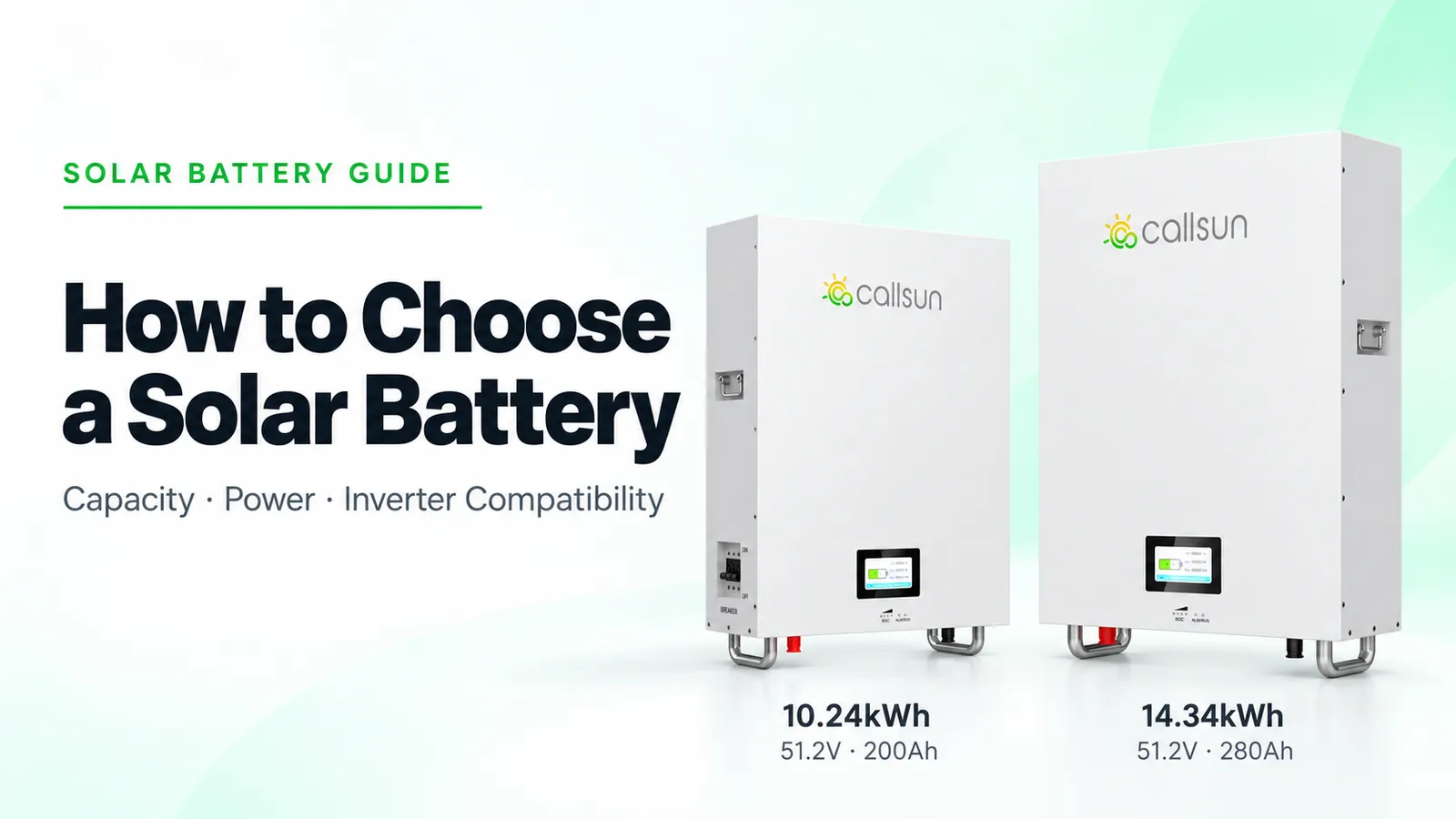
For a more detailed explanation of usable energy, runtime and battery power limits, see How to Choose a Solar Battery: Capacity, Power and Inverter Compatibility.
Verify Compatibility Across the Equipment
Buying panels, an inverter and batteries as a package can simplify sourcing. The configuration still needs to be checked against the project’s electrical and installation requirements.
AC Supply and Output
Confirm the required voltage, frequency and phase arrangement.
For example, a project requiring 120/240V split-phase output needs equipment and wiring appropriate to that supply. A matching power rating alone does not establish compatibility with the local electrical system.
PV Input and String Configuration
Check the proposed module arrangement against the inverter’s:
- Maximum PV open-circuit voltage.
- MPPT operating voltage range.
- Permitted input and short-circuit currents.
- Number of MPPT inputs.
- Supported PV input power. The array must be reviewed using the selected module’s electrical characteristics and the expected site conditions, including temperature effects on voltage.
Battery Voltage, Current and Communication
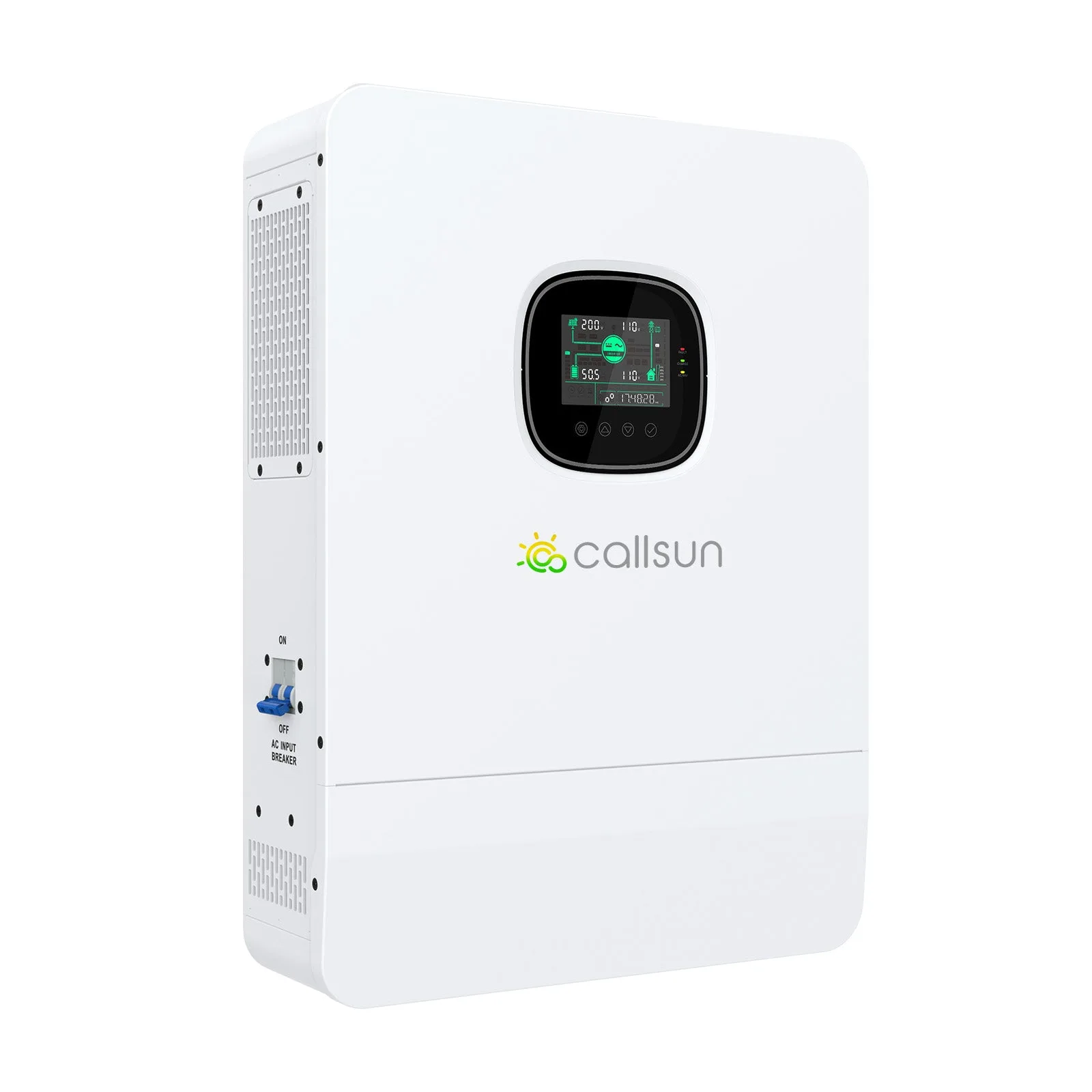
“48V hybrid inverter” is a useful product category, but it is not a complete battery compatibility statement.
Review the inverter’s supported battery voltage range alongside the battery’s operating limits and required settings. Charging and discharging currents must remain within the permitted limits of the battery configuration.
CAN or RS485 ports alone do not prove that two devices communicate correctly. Confirm the supported protocol, configuration, firmware and cable requirements where communication is used.
You can review the listed specifications in the CALLSUN hybrid solar inverter range and LiFePO4 battery portfolio.
Installation Conditions
Confirm equipment dimensions, weight, enclosure protection, mounting requirements, ventilation and service access.
An outdoor-rated component does not make every component in the package suitable for outdoor installation. Each device needs an appropriate location.
Compare CALLSUN Reference Configurations
CALLSUN lists the following solar-and-battery configurations for project discussions.
| Reference Configuration | PV Array | Inverter Rated AC Output | Nominal Battery Energy | Application |
|---|---|---|---|---|
| 5.4kW Off-Grid Solar Kit | 12 × 450W panels, 5.4kWp | 6.5kW | 10.24kWh | Off-grid and backup |
| 7.2kW Off-Grid Solar Kit | 16 × 450W panels, 7.2kWp | 10kW | 14.34kWh | Off-grid and backup |
| 10.8kW Hybrid Solar Kit | 24 × 450W panels, 10.8kWp | 12kW | 28.68kWh (2 × 14.34kWh) | Hybrid solar and backup |
These figures describe the listed configurations. Battery energy is nominal, and inverter output is an equipment rating. Actual system output and runtime depend on the available sources, battery operating limits, loads and final configuration.
The 5.4kW and 7.2kW options provide starting points for off-grid and backup discussions. The 10.8kW hybrid option supports discussions involving grid-connected storage and backup requirements. Grid operation and export settings must be confirmed against the exact inverter version, applicable approvals and local utility requirements.
Compare the CALLSUN solar system configurations against the same project load schedule before selecting an option.
Compare Quotations on the Same Basis
The lowest package price is meaningful only when quotations cover comparable equipment and responsibilities.
Before comparing totals, confirm:
| Procurement Check | Questions to Resolve |
|---|---|
| Equipment identity | Are exact models and quantities stated, or only power and capacity figures? |
| Operating functions | Does the quoted inverter support the project’s required modes? |
| Battery configuration | Are energy, module count and operating limits clearly identified? |
| Included accessories | Which cables, mounting items and protection devices are supplied? |
| Technical documents | Which documents apply to the exact quoted equipment and destination market? |
| Delivery scope | What destination, freight services, taxes and unloading arrangements are included? |
A proposed substitution should be assessed for its effect on electrical compatibility, dimensions, documentation and installation.
Distributors should also confirm whether the quoted configuration can be supplied consistently for repeat orders and how product changes will be communicated.
Prepare a Useful System Inquiry
A focused inquiry helps the supplier review the configuration and reduces repeated quotation changes.
Provide the information available for your project:
- Company role: installer, distributor, system provider or project buyer.
- Project country and delivery destination.
- Required AC voltage, frequency and phase arrangement.
- Intended operation: off-grid, backup, utility-supported or grid-connected.
- Load schedule, starting loads and target backup duration.
- Existing equipment and installation constraints.
- Estimated order quantity and purchasing schedule.
- Required technical documents and market-specific approvals.
- Equipment or services expected within the quotation. If some details are undecided, identify the open questions. The initial discussion can establish what needs to be confirmed before equipment selection.
Frequently Asked Questions
Can an off-grid solar system accept utility power?
Some off-grid inverters accept utility power for battery charging or bypass supply. This does not establish grid-export capability. Check the operating modes and documentation for the exact model.
Does a hybrid solar system always export electricity?
No. Supported functions and configured operating modes vary. Grid connection and export also depend on applicable approvals and utility requirements. Specify whether the project requires self-consumption, backup, export limitation or permitted export.
Does a kit with a 10kW inverter continuously supply 10kW?
The inverter rating alone is insufficient to confirm that result. Available PV power, battery discharge limits, operating conditions and the complete system configuration determine what can be supplied.
Does a solar kit include everything needed for installation?
The quotation and bill of materials define what is included. Site-specific mounting, protection, distribution, wiring and installation work may require additional equipment or services.
Tagged
Next step
Discuss Your Solar System Requirements with CALLSUN
Share your operating requirements, load schedule, destination and order quantity. Our team can review the request and discuss the relevant equipment, available documentation and supply arrangements.
Submit a System InquiryContinue Reading